
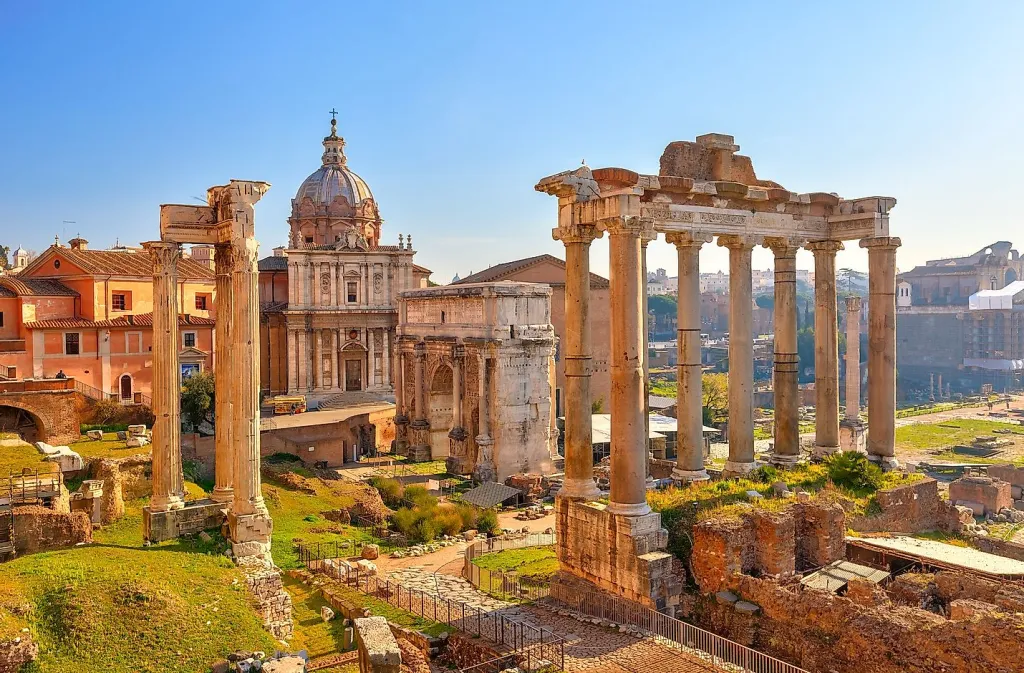

Walk through the ruins of ancient Rome today, and you’ll quickly understand why Roman architecture continues to fascinate historians, architects, and travelers alike. Towering amphitheaters, perfectly proportioned temples, massive domes, and sophisticated aqueducts reveal a civilization that transformed building design through innovation and engineering. Many construction techniques pioneered nearly 2,000 years ago still influence modern architecture, proving that the Romans were far ahead of their time.
Roman architecture was more than monumental buildings—it represented a complete system of urban planning, engineering, and public infrastructure. By combining practical construction methods with artistic design, Roman builders created structures that were durable, functional, and visually impressive. Their use of concrete, arches, vaults, and domes revolutionized construction and established principles that continue to shape cities around the world.
This guide explores the origins, defining features, famous structures, and lasting influence of Roman architecture.
The Origins of Roman Architecture
Roman architecture developed between the Roman Republic (509–27 BCE) and the Roman Empire (27 BCE–476 CE). Rather than creating an entirely new architectural style, Roman builders adapted ideas from neighboring civilizations and significantly improved them.
The Etruscans introduced techniques such as the arch, strong foundations, and practical city planning. The Greeks inspired Roman architects with their elegant columns, balanced proportions, and decorative temples. Roman engineers combined these influences with their own innovations to create buildings that were larger, stronger, and better suited for public life.
This willingness to improve existing ideas became one of Rome’s greatest strengths, allowing the empire to build structures that have survived for centuries.
Roman Concrete: A Construction Revolution
Perhaps the greatest innovation in Roman architecture was the development of Roman concrete, known as opus caementicium.
Unlike traditional stone construction, Roman concrete was created by mixing lime, volcanic ash, water, and small pieces of stone. The result was an exceptionally durable material capable of supporting enormous structures while allowing architects greater creative freedom.
Concrete enabled builders to create:
- Massive domes
- Curved walls
- Large public baths
- Amphitheaters
- Vaulted ceilings
- Multi-story buildings
Many Roman concrete structures remain standing today, demonstrating the remarkable durability of this ancient building material.
The Power of Arches and Vaults
The Roman arch transformed architectural engineering.
Instead of relying on heavy horizontal beams, arches distributed weight more efficiently, allowing buildings to span greater distances with fewer supports. This innovation made larger interiors possible while increasing structural strength.
Romans expanded this concept by developing several vaulting techniques.
Barrel Vaults
Long tunnel-like ceilings created by extending a single arch.
Groin Vaults
Produced by intersecting two barrel vaults, allowing larger and more open interior spaces.
Domes
Circular vaults that covered enormous areas without requiring internal columns.
These techniques became defining characteristics of Roman architecture and later inspired Renaissance and modern engineering.
The Pantheon: A Timeless Architectural Wonder
Among all surviving Roman monuments, the Pantheon remains one of the greatest engineering achievements.
Completed during Emperor Hadrian’s reign in the second century CE, the Pantheon features an enormous unreinforced concrete dome that continues to amaze engineers today.
Its famous oculus—a circular opening at the dome’s center—allows natural sunlight to illuminate the interior while reducing structural weight.
Nearly two thousand years after its construction, the Pantheon remains one of the world’s best-preserved ancient buildings and continues to influence architects globally.
The Colosseum: Engineering Meets Entertainment
No discussion of Roman architecture is complete without the Colosseum.
Completed in 80 CE, this enormous amphitheater could accommodate approximately 50,000 spectators for gladiator contests, theatrical performances, and public spectacles.
Its advanced design included:
- Multiple levels of seating
- Extensive arch systems
- Underground chambers
- Animal elevators
- Efficient crowd management
- Sophisticated ventilation
The Colosseum demonstrates how Roman engineers successfully combined structural innovation with public functionality.
Roman Temples
Roman temples reflected both religious devotion and architectural sophistication.
While inspired by Greek temples, Roman versions introduced several unique features:
- Raised podiums
- Large front staircases
- Deep entrance porches
- Emphasis on the front façade
- Decorative Corinthian columns
These design choices created grand entrances while reinforcing the importance of religious ceremonies within Roman society.
Many later government buildings, museums, and courthouses adopted similar temple-inspired designs.
Aqueducts: Bringing Water Across the Empire
Roman aqueducts stand among history’s greatest engineering accomplishments.
Using carefully calculated gradients, arches, and gravity, these systems transported fresh water over remarkable distances into growing cities.
Aqueducts supplied:
- Public baths
- Drinking fountains
- Private homes
- Gardens
- Industrial workshops
One of the finest surviving examples is the Pont du Gard in southern France, whose elegant three-level arch design continues to attract visitors from around the world.
These water systems dramatically improved sanitation, public health, and urban development throughout the Roman Empire.
Roads and Bridges
The success of Rome depended heavily on transportation infrastructure.
Roman engineers built thousands of miles of roads using carefully layered construction techniques designed for durability.
Typical Roman roads consisted of:
- Stone foundations
- Gravel layers
- Sand bedding
- Paved stone surfaces
Many sections remain visible today.
Roman bridges also demonstrated remarkable engineering skill. Using arches and concrete, they supported heavy traffic while resisting floods and erosion for centuries.
These transportation networks connected cities, supported trade, and allowed military forces to travel efficiently across the empire.
The Roman Forum
The Roman Forum served as the political, commercial, and social heart of ancient Rome.
Rather than a single building, it was a carefully planned public complex containing:
- Government offices
- Temples
- Markets
- Basilicas
- Monuments
- Public gathering spaces
The Forum reflected Rome’s commitment to organized urban planning and influenced the design of civic centers for generations.
Public Baths
Roman bathhouses were far more than places for bathing.
These massive complexes included:
- Hot and cold pools
- Exercise areas
- Libraries
- Gardens
- Meeting halls
- Social spaces
Their enormous vaulted interiors showcased Roman engineering while providing essential public services.
Key Characteristics of Roman Architecture
Several features distinguish Roman architecture from earlier civilizations:
- Extensive use of concrete
- Large arches and vaulted ceilings
- Massive domes
- Monumental public buildings
- Symmetrical layouts
- Practical urban planning
- Durable infrastructure
- Decorative columns inspired by Greek design
Together, these elements created buildings that balanced beauty with exceptional functionality.
Lasting Influence on Modern Architecture
Roman architecture continues to shape the built environment today.
Its influence appears in:
- Government buildings
- Museums
- Courthouses
- Universities
- Sports stadiums
- Railway stations
- Churches
- Memorial monuments
Modern engineers still rely on structural principles first perfected by Roman builders, particularly in the use of arches, domes, and reinforced concrete construction.
Urban planning concepts developed during the Roman Empire also influenced city design throughout Europe and later across the Americas.
Why Roman Architecture Still Matters
Roman architecture represents one of humanity’s greatest engineering achievements.
Its innovations solved practical challenges while creating structures that inspired awe and reflected civic pride. Many Roman buildings remain functional after nearly two millennia, demonstrating the durability and intelligence of their construction methods.
For architects, engineers, historians, and travelers, Roman architecture offers valuable lessons about creativity, efficiency, and long-term design.
Final Thoughts
Roman architecture transformed the ancient world through groundbreaking engineering and timeless design. From monumental landmarks like the Pantheon and the Colosseum to everyday infrastructure such as roads, bridges, and aqueducts, Roman builders created an architectural legacy that continues to influence modern construction.
Their mastery of concrete, arches, vaults, and urban planning established standards that remain relevant today. More than historical monuments, Roman structures are enduring examples of innovation, craftsmanship, and practical design—proof that great architecture can stand the test of time.