
Iceland is the kind of country where the landscape can influence where you want to live. One person may dream of a modern apartment in Reykjavík, while another imagines a small house surrounded by mountains, geothermal hot springs, and open countryside. For others, the attraction is a second home close to Iceland’s dramatic coastline or a property that can eventually become a long-term investment.
That variety is one reason searches for homes for sale in Iceland continue to attract international attention. But buying property in Iceland requires more than finding a beautiful house online. Location, weather exposure, heating systems, access to services, financing, ownership rules, and the condition of the property can all make a significant difference.
The Icelandic property market also works differently from many overseas markets. A house that looks inexpensive may need substantial renovation, while a smaller property in or around Reykjavík can command a much higher price because of location.
This guide explains what to look for, where to search, how the buying process works, and which details are worth checking before committing to a property in Iceland.
Why Buy a Home in Iceland?
Iceland offers a lifestyle that is difficult to replicate elsewhere.
The country combines a relatively small population with dramatic natural surroundings, modern infrastructure, strong public services, and easy access to outdoor activities. Reykjavík provides restaurants, cultural attractions, universities, healthcare facilities, and employment opportunities, while smaller communities offer a quieter pace of life.
For a potential buyer, however, the attraction should go beyond scenery.
A property is a long-term financial and practical commitment. Before searching listings, think about what you actually want from the purchase.
Are you looking for:
- A permanent residence?
- A holiday home?
- A retirement property?
- A rural escape?
- A property close to Reykjavík?
- A potential rental investment?
- A home that requires renovation?
- A newly built, low-maintenance property?
The answer can completely change which part of Iceland makes sense.
Homes for Sale in Iceland: What Types of Properties Are Available?
The Icelandic housing market includes considerably more variety than the stereotypical picture of a colorful Nordic cottage.
1. Apartments in Reykjavík
Apartments are among the most practical options for buyers who want access to city services.
Reykjavík and nearby municipalities offer:
- Modern apartments
- Older apartment buildings
- Newly constructed developments
- Ground-floor units
- Larger family apartments
- Penthouses and high-end properties
Apartments can be particularly attractive for buyers who don’t want the maintenance responsibilities associated with a detached house.
One important point is to examine the building as well as the individual apartment. Shared maintenance, building condition, common areas, monthly fees, parking arrangements, and planned repairs can affect the true cost of ownership.
2. Detached Houses
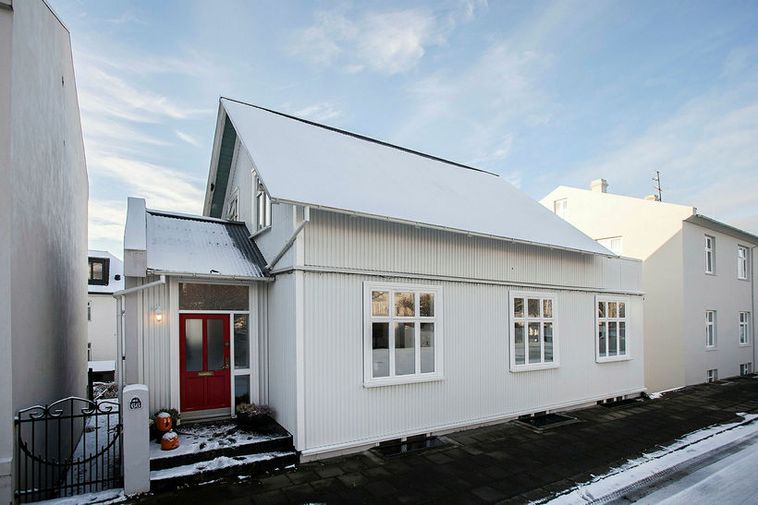
Detached homes are more common when you move beyond the most densely developed parts of the capital region.
They can provide:
- Private outdoor space
- More storage
- Additional bedrooms
- Parking
- Greater privacy
- More flexibility for families
However, detached properties also generally involve more maintenance. In Iceland’s climate, the condition of the roof, exterior materials, drainage, windows, insulation, and heating system deserves particular attention.
3. Rural Homes and Farm Properties
For buyers who want peace and space, rural properties can be extremely appealing.
A farmhouse or countryside property may offer substantial land, spectacular views, and opportunities for gardening, recreation, or agricultural use.
But rural living requires realistic planning.
A beautiful property several kilometers from the nearest town may mean longer journeys for groceries, healthcare, schools, repairs, and other everyday services.
Winter accessibility is another important consideration. Don’t evaluate a rural property only during good weather.
4. Holiday Homes and Cabins
Holiday properties are popular with buyers who want to spend time away from the city.
Some are simple cabins, while others are modern homes designed around Iceland’s natural surroundings.
Before buying a second home, check local planning rules and the property’s permitted use. A property suitable for personal holidays is not automatically suitable for commercial short-term accommodation.
5. Luxury Homes
Iceland also has a relatively small but distinctive luxury property market.
High-end homes may feature:
- Large windows
- Contemporary architecture
- Premium kitchens
- Designer interiors
- Geothermal or other efficient heating
- Outdoor hot tubs
- Mountain, ocean, or countryside views
With luxury properties, the quality of construction and land can be more important than the number of decorative features.
Can Foreigners Buy Property in Iceland?
This is one of the most important questions for international buyers.
Foreign ownership of Icelandic real estate is subject to Icelandic rules, and the answer can depend on factors such as citizenship, residence, and the buyer’s connection to Iceland.
Citizens of countries within the European Economic Area and certain other groups can have different rights from buyers who are not covered by those arrangements. Non-residents should therefore verify their eligibility before making an offer.
Don’t assume that owning a property automatically gives you the right to live in Iceland.
Property ownership and immigration status are separate issues.
If your goal is to relocate permanently, investigate residence and immigration requirements independently from the property purchase.
For an international buyer, professional legal advice before signing a binding agreement can prevent a very expensive misunderstanding.
How Much Do Homes in Iceland Cost?
There is no single price for a home in Iceland.
Property values vary substantially according to:
- Location
- Property size
- Construction year
- Condition
- Land size
- Views
- Proximity to Reykjavík
- Access to roads and utilities
- New-build versus older construction
- Parking
- Renovation requirements
Reykjavík and the surrounding capital region generally command higher prices than many smaller communities.
However, “rural” does not automatically mean “cheap.” A renovated countryside home in an attractive tourist region can be considerably more expensive than an ordinary house in a less sought-after town.
Don’t judge a property by its asking price alone
When comparing homes, calculate the broader cost of ownership.
Consider:
- Purchase price
- Transaction costs
- Legal or professional fees
- Financing costs
- Insurance
- Property-related charges
- Maintenance
- Renovation
- Utilities
- Travel costs if you’re not living nearby
A property requiring major work can quickly become more expensive than a higher-priced home that is ready to occupy.
Reykjavík vs. Rural Iceland: Which Is Better?
There is no universal answer.
Reykjavík is usually better suited to buyers who want:
- Employment opportunities
- Restaurants and entertainment
- Healthcare access
- Public services
- Universities and education
- Greater property choice
- Convenient everyday infrastructure
Rural Iceland may be better for buyers who prioritize:
- Privacy
- Larger plots
- Nature
- Quiet surroundings
- Outdoor activities
- A slower lifestyle
There is also a middle ground.
Towns and communities outside central Reykjavík can offer more space while maintaining relatively convenient access to the capital region.
For many buyers, this compromise can be more practical than choosing either central-city living or extremely remote countryside.
Popular Places to Look for Homes in Iceland
Reykjavík
Reykjavík is the natural starting point for buyers who want the widest access to employment, culture, services, and urban amenities.
Neighborhoods differ significantly in character, so don’t evaluate the city as one uniform property market.
Kópavogur and Garðabær
These municipalities form part of the greater capital area and can appeal to families and buyers who want suburban living while remaining close to Reykjavík.
Hafnarfjörður
Hafnarfjörður combines a coastal setting with access to the capital region and has a distinct local character.
Akureyri
Akureyri is one of the country’s most important urban centers outside the capital region. Its location in northern Iceland provides access to mountains, skiing, fjords, and outdoor recreation.
It can be attractive to buyers who want a genuine town environment without living in Reykjavík.
South Iceland
The South Coast and surrounding areas offer some of Iceland’s most recognizable scenery.
Buyers can find homes and holiday properties in communities close to waterfalls, glaciers, black-sand beaches, and other natural attractions.
The scenery is a major advantage, but tourist demand and seasonal traffic should be considered before buying.
The Golden Circle Area
Properties around the Golden Circle can appeal to buyers interested in countryside living and proximity to major attractions.
However, tourism potential should not be the only reason to buy. Verify planning permission and permitted rental use before assuming that a property can generate holiday-rental income.
What Should You Check Before Buying a Home in Iceland?
A property can look perfect during a viewing and still have expensive problems.
Before committing, pay particular attention to the following.
1. Heating System
Heating is especially important in Iceland.
Find out how the property is heated and understand the condition and operating costs of the system.
Geothermal heating is an important feature of Icelandic infrastructure, but not every property has identical systems or costs.
Ask for recent utility information where available rather than relying solely on the seller’s verbal estimate.
2. Insulation and Windows
Icelandic weather can be demanding.
Check:
- Insulation
- Window condition
- Exterior doors
- Drafts
- Roof condition
- Moisture
- Signs of water intrusion
An older home may have character but could require significant energy-efficiency improvements.
3. Roof and Exterior
Wind, precipitation, freezing conditions, and changing weather can put considerable stress on a building.
Look carefully at the roof, exterior cladding, drainage, gutters, and any visible signs of deterioration.
A professional inspection is worthwhile when the property’s age or condition creates uncertainty.
4. Road Access
This matters particularly for rural properties.
Ask how easily the property can be reached throughout the year.
A road that is perfectly accessible during a summer viewing may present a very different experience during winter weather.
5. Water and Wastewater
For properties outside established urban areas, determine how water supply and wastewater systems work.
Check whether the property is connected to municipal services or relies on private infrastructure.
Private systems may require additional maintenance and should be investigated before purchase.
A Practical Property-Buying Process
Once you find a home you are seriously considering, avoid rushing simply because the property looks attractive.
A typical transaction can involve several stages.
Step 1: Establish your budget
Determine how much you can comfortably spend, including costs beyond the purchase price.
If financing is required, understand your borrowing options before making an offer.
Step 2: Confirm your eligibility
If you’re a foreign buyer or non-resident, verify that you are legally able to acquire the specific property.
Step 3: Find a qualified local professional
A local real estate agent can help explain listings, market conditions, offers, and transaction procedures.
For international purchases, an Icelandic lawyer or qualified legal adviser can also be valuable.
Step 4: Inspect the property
Don’t rely solely on photographs or a quick viewing.
Inspect the building, systems, land, access, and surrounding environment.
Step 5: Review documentation
Check ownership, liens, property boundaries, building information, permitted use, and other relevant records.
Step 6: Submit an offer
The exact procedure can vary, but offers should be treated seriously. Understand the terms before signing anything.
Step 7: Complete the agreement and payment
Once the transaction is agreed and legal requirements are satisfied, the remaining steps involve completing payment and formally transferring ownership.
Your local professionals should explain exactly what is required in your transaction.
Buying an Icelandic Home as an Investment
Iceland’s tourism industry naturally attracts investors interested in holiday accommodation.
But buying a property because “tourists will always want it” is not a sufficient investment strategy.
Before purchasing an investment property, research:
- Local demand
- Seasonality
- Occupancy expectations
- Local regulations
- Permitted rental use
- Management costs
- Cleaning costs
- Maintenance
- Insurance
- Taxes and fees
- Competition from other accommodation
A property with a spectacular view may photograph beautifully but still perform poorly if it is difficult to access or lacks necessary permissions.
The strongest investment decision is based on actual numbers rather than the property’s Instagram appeal.
Is a Fixer-Upper in Iceland a Good Idea?
A renovation property can offer an opportunity to create a home exactly to your taste.
But overseas renovation projects are much harder when you’re unfamiliar with local contractors, regulations, materials, construction practices, and weather conditions.
Before buying a fixer-upper, obtain realistic estimates for:
- Roofing
- Insulation
- Windows
- Plumbing
- Electrical work
- Heating
- Kitchens
- Bathrooms
- Structural repairs
Also investigate whether the changes you want are legally permitted.
A low purchase price isn’t necessarily a bargain if the renovation budget is uncertain.
Practical Tips for International Buyers
If you’re viewing homes for sale in Iceland from another country, use a slightly different strategy.
Don’t buy based on photographs alone
Photos rarely show:
- Road noise
- Wind exposure
- Nearby construction
- Neighborhood character
- Property access
- Building odors
- Heating performance
- Storage limitations
If possible, visit in person.
Experience the area at different times
A neighborhood can feel completely different on a quiet Sunday morning compared with a busy weekday.
If you’re considering a tourist destination, also understand how seasonal activity affects the area.
Look beyond Reykjavík
If your lifestyle doesn’t require constant access to the capital, expanding the search can reveal different property types and potentially better value.
Think about resale
Even if you plan to stay permanently, circumstances can change.
Properties with practical layouts, good access, strong infrastructure, and desirable locations generally have a broader pool of potential future buyers than highly specialized properties.
Common Mistakes When Buying Property in Iceland
Mistake 1: Assuming ownership means residency
It doesn’t automatically work that way. Immigration and property ownership are separate matters.
Mistake 2: Choosing scenery over practicality
A spectacular view cannot compensate for difficult access, poor services, or excessive maintenance costs.
Mistake 3: Ignoring winter conditions
Always consider what the property and surrounding roads are like during Iceland’s more challenging weather.
Mistake 4: Underestimating renovation costs
Older homes can require more work than expected, particularly when insulation, heating, roofing, or windows need improvement.
Mistake 5: Assuming every property can become a holiday rental
Planning rules and permitted uses matter. Verify them before treating rental income as part of your financial calculation.
FAQ
Can foreigners buy homes in Iceland?
Foreigners may be able to buy property in Iceland, but eligibility depends on factors such as citizenship, residency, and applicable Icelandic rules. Buyers who do not have straightforward eligibility should confirm their position with a qualified Icelandic legal professional before making a binding offer.
Where are the cheapest homes for sale in Iceland?
Prices vary considerably by location, property type, condition, and demand. Smaller communities and less central areas can sometimes offer lower prices than Reykjavík, but remote properties may involve higher transportation, maintenance, or renovation costs.
Is Reykjavík a good place to buy a home?
Reykjavík can be a strong choice for buyers who value employment, healthcare, education, restaurants, cultural activities, and convenient services. It is generally more expensive than many parts of rural Iceland, so buyers should compare location benefits with the additional purchase cost.
Can I buy a holiday home in Iceland?
A holiday home may be possible depending on the property and applicable rules. However, buyers should check planning requirements, permitted use, access, utilities, and any restrictions before purchasing a property specifically for holidays or short-term rental.
Is buying a house in rural Iceland a good idea?
It can be an excellent choice for someone who values privacy, nature, and space. However, rural living requires more consideration of road access, weather, utilities, healthcare, shopping, maintenance, and distance from larger communities.
What should I inspect before buying a house in Iceland?
Pay particular attention to heating, insulation, windows, roofing, moisture, drainage, electrical and plumbing systems, road access, and the condition of the surrounding land. For an older or expensive property, a professional inspection can help identify problems that aren’t obvious during a normal viewing.
Conclusion
Searching for homes for sale in Iceland is about much more than finding a beautiful property surrounded by dramatic scenery.
The right home needs to work for your actual lifestyle.
A Reykjavík apartment may make sense if convenience and access to services are priorities. A suburban property can provide more space without giving up access to the capital. A home in Akureyri may suit someone looking for a smaller community, while a rural property can offer the privacy and scenery that make Iceland so appealing.
For international buyers, the most important step is to slow down and investigate the practical details. Confirm your eligibility to purchase, understand the property’s legal status, inspect the building, evaluate heating and insulation, research access and utilities, and never assume that a property can automatically be used as a rental.
Iceland’s landscapes may be what first attracts you, but a well-chosen home should make everyday life there just as rewarding.