
A washing machine is one of the hardest-working appliances in any home, but many people forget that the machine itself also needs regular cleaning. Although it removes dirt from clothes, a washer can collect detergent residue, fabric softener buildup, lint, bacteria, mold, and unpleasant odors over time.
A dirty washing machine may not only smell bad but can also affect washing performance. Clothes may come out less fresh, and moisture trapped inside the machine can create the perfect environment for mold and mildew growth.
The good news is that learning how to clean a washing machine is simple. With regular maintenance and a few basic cleaning supplies, you can keep your washer working efficiently and extend its lifespan.
This complete guide explains how to clean both front-load and top-load washing machines, how often you should clean them, what products to use, and how to prevent future buildup.
Why Is It Important to Clean Your Washing Machine?
Many people assume that a machine designed to wash clothes automatically stays clean. However, washing machines regularly come into contact with:
- Dirty laundry
- Detergent chemicals
- Fabric softeners
- Moisture
- Body oils
- Lint and debris
Over time, these materials can build up inside the drum, seals, and dispensers.
Common Problems Caused by a Dirty Washing Machine
Mold and Mildew Growth
The warm, damp environment inside a washing machine creates ideal conditions for mold growth, especially around rubber door seals in front-load models.
Bad Odors
A musty smell often comes from trapped moisture, detergent residue, and bacteria buildup.
Detergent Residue
Using too much detergent can leave behind a sticky layer that reduces cleaning performance.
Less Fresh Laundry
A dirty washer can transfer unpleasant smells and residue back onto freshly washed clothes.
Reduced Appliance Lifespan
Regular maintenance helps prevent clogged parts, drainage problems, and unnecessary repairs.
Cleaning your washing machine regularly protects both your clothes and your appliance.
How Often Should You Clean a Washing Machine?
The ideal cleaning schedule depends on how frequently you use your washer.
Light Usage (1–2 Loads Per Week)
Clean your washing machine every 3 months.
Moderate Usage (3–5 Loads Per Week)
Clean it every 1–2 months.
Heavy Usage (Daily Washing)
Clean it approximately once a month.
You should also clean your washer immediately if you notice:
- Bad smells
- Visible mold
- Black residue around seals
- Slow drainage
- Detergent buildup
Supplies Needed to Clean Your Washing Machine
Before starting, collect these basic cleaning items:
- White vinegar
- Baking soda
- Microfiber cloth
- Soft sponge
- Old toothbrush
- Warm water
- Mild dish soap
- Bleach (optional for heavy mold problems)
Note: Always check your washing machine manufacturer’s instructions before using cleaning products. Some manufacturers recommend specific washer cleaners instead of vinegar or bleach.
How to Clean a Top-Loading Washing Machine
Top-load washers are usually easier to clean because the drum is more accessible.
Step 1: Clean the Washing Machine Drum
- Empty the washer completely.
- Select the largest load setting.
- Choose the hottest water temperature available.
- Add 4 cups of white vinegar directly into the drum.
- Start the cycle and pause it after the drum fills.
- Allow the vinegar solution to sit for about one hour.
- Continue the cycle until it finishes.
The vinegar helps break down detergent residue and mineral deposits.
Step 2: Run a Baking Soda Cleaning Cycle
After the vinegar cycle:
- Add 1 cup of baking soda into the drum.
- Run another hot water cycle.
Baking soda helps remove remaining odors and freshens the interior.
Step 3: Clean Detergent and Fabric Softener Dispensers
Remove any removable trays or compartments.
Clean them by:
- Soaking them in warm soapy water
- Scrubbing buildup with a toothbrush
- Rinsing thoroughly before reinstalling
Step 4: Clean the Exterior
Use a microfiber cloth with warm water and mild soap to wipe:
- Lid
- Control panel
- Buttons
- Outside surfaces
Avoid using excessive water around electronic controls.
Step 5: Clean the Agitator
If your washer has an agitator:
- Check around the base
- Remove trapped dirt or fabric residue
- Scrub difficult areas with a toothbrush
How to Clean a Front-Loading Washing Machine
Front-load washing machines are energy-efficient but require extra attention because moisture can remain trapped around the door gasket.
Step 1: Clean the Drum
Follow these steps:
- Empty the washing machine.
- Add 2 cups of white vinegar into the drum.
- Run the hottest cleaning cycle available.
- After completion, add ½ cup of baking soda.
- Run another hot cycle.
This helps remove odors and residue.
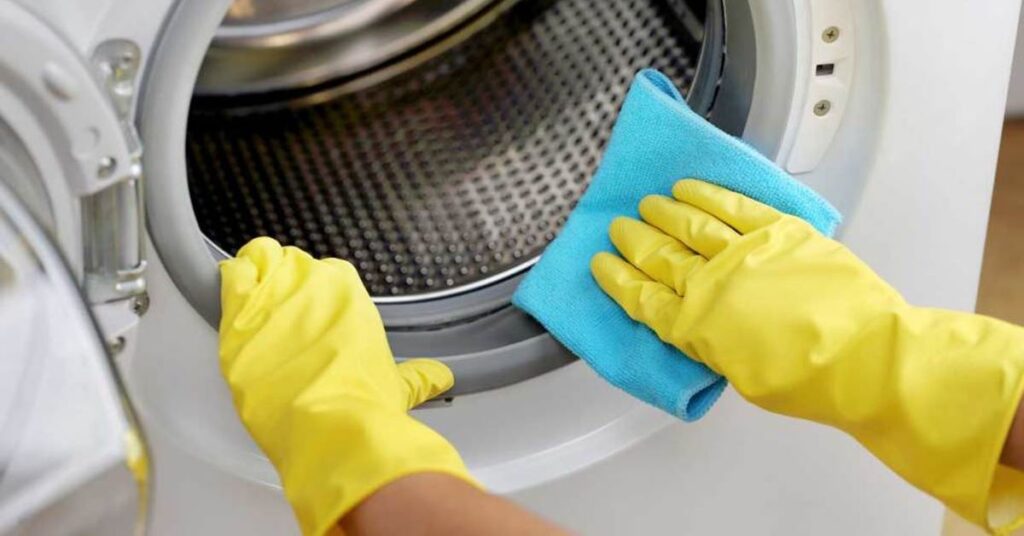
Step 2: Clean the Rubber Door Gasket
The rubber seal around the door is one of the most common places for mold growth.
To clean it:
- Pull back the rubber folds carefully.
- Remove trapped hair, lint, or debris.
- Wipe the area with vinegar and water solution.
- Scrub gently with a toothbrush or cloth.
For severe mold buildup, follow your manufacturer’s recommendations for safe cleaning products.
Step 3: Clean the Detergent Drawer
Detergent drawers often collect sticky residue.
Clean them by:
- Removing the drawer
- Soaking it in warm water
- Scrubbing corners and openings
- Drying before replacing
Step 4: Clean the Door and Glass
Use a microfiber cloth to clean:
- Inside glass
- Door frame
- Outer surface
This prevents dirt and water marks from building up.
How to Prevent Washing Machine Odors and Buildup
Regular cleaning is important, but prevention makes maintenance easier.
Leave the Door or Lid Open
After every wash:
- Keep the door slightly open
- Allow air circulation
- Let moisture evaporate
This reduces mold growth.
Use the Correct Amount of Detergent
Too much detergent can create buildup.
Always follow:
- Manufacturer instructions
- Detergent recommendations
- Washer capacity guidelines
Use High-Efficiency Detergent When Required
Many modern machines require HE detergent because it creates fewer suds and rinses more effectively.
Remove Wet Clothes Quickly
Leaving wet clothes inside the washer encourages:
- Odors
- Bacteria growth
- Mold formation
Clean the Drain Pump Filter
Front-load washers often include a drain pump filter.
Cleaning it regularly helps prevent:
- Drainage problems
- Water buildup
- Bad smells
Common Washing Machine Cleaning Mistakes
Avoid these mistakes when maintaining your washer:
Using Too Much Cleaning Product
More cleaner does not always mean better results. Excess products can leave residue.
Closing the Door Immediately After Washing
A sealed, wet drum encourages mold growth.
Ignoring Small Odors
A mild smell can become a major mold problem if ignored.
Forgetting Hidden Areas
Important areas to check include:
- Door gasket
- Detergent drawer
- Drain filter
- Agitator base
When Should You Call a Professional?
DIY cleaning works for normal buildup, but professional help may be needed if:
- The machine does not drain properly
- Strong odors remain after cleaning
- Mold keeps returning
- The washer makes unusual noises
- Water leaks appear
A technician can inspect internal components and identify mechanical problems.
FAQs
How often should you clean a washing machine?
Most washing machines should be cleaned every 1–3 months depending on usage.
Can vinegar clean a washing machine?
White vinegar can help remove some odors and residue, but always check your appliance manufacturer’s recommendations before using it regularly.
How do I clean a washing machine that smells bad?
Run a cleaning cycle, clean the detergent drawer, wipe the gasket, and leave the door open after use.
Should I use bleach to clean my washing machine?
Bleach can help with heavy mold problems, but it should be used carefully and according to manufacturer instructions.
Why does my washing machine smell even after cleaning?
Persistent odors may come from hidden mold, clogged filters, drainage issues, or internal buildup.
Final Thoughts
Knowing how to clean a washing machine is one of the easiest ways to protect your appliance and keep your laundry fresh.
Whether you own a top-load or front-load washer, regular cleaning helps prevent:
- Mold
- Bad odors
- Detergent buildup
- Reduced performance
A few minutes of maintenance each month can improve washing results, extend the life of your machine, and save money on future repairs.
A clean washing machine does not just wash better—it helps your entire laundry routine work more efficiently.