
There is a good chance you already own a pair of kitchen shears but don’t use them nearly as much as you should.
For many home cooks, scissors stay hidden in a kitchen drawer and only come out when a food packet refuses to open. But a good pair of kitchen shears can be much more useful than that. They can trim poultry, snip herbs directly over a pan, cut parchment and kitchen twine, divide flatbreads, and handle small preparation jobs that can feel awkward with a chef’s knife.
The difference becomes obvious when you’re preparing a large meal. Instead of moving between a cutting board, knife and several other tools, you can sometimes finish a small task with a few controlled snips.
That doesn’t mean kitchen shears replace knives. They don’t. Their real advantage is that they are specialized for jobs where cutting with two blades is faster, more controlled or simply more convenient.
This guide explains what kitchen shears are good for, which features actually matter when buying them, how to clean and maintain them, and which common mistakes can shorten their useful life.
What Are Kitchen Shears?
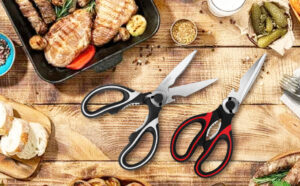
Kitchen shears are heavy-duty scissors specifically designed for food preparation and related kitchen tasks.
Compared with ordinary household scissors, they generally have:
- Stronger blades
- More substantial handles
- Better grip
- Greater cutting leverage
- Food-safe construction
- Thicker materials
- Designs intended for repeated kitchen use
Some models are also built with additional features such as nutcrackers, bottle openers or serrated sections.
However, extra features aren’t automatically better.
For most home cooks, strong blades, comfortable handles, easy cleaning and reliable construction are more important than having five different functions built into the handle.
What Are Kitchen Shears Used For?
The versatility of kitchen shears is their biggest advantage.
1. Cutting Poultry
This is one of the tasks where kitchen shears can be particularly useful.
Strong shears can help trim:
- Chicken skin
- Excess fat
- Small pieces of poultry
- Turkey
- Duck
- Other poultry components
They can also be useful for spatchcocking poultry when the model is sufficiently strong for the task.
The advantage is control.
Instead of pressing a knife through slippery skin or awkward joints, you can position the blades around the material and cut progressively.
Important: Use shears specifically designed for food preparation and appropriate for the task. Don’t force lightweight kitchen scissors through hard bones.
2. Snipping Fresh Herbs
Kitchen shears are excellent for herbs such as:
- Chives
- Parsley
- Cilantro
- Green onions
- Basil
- Dill
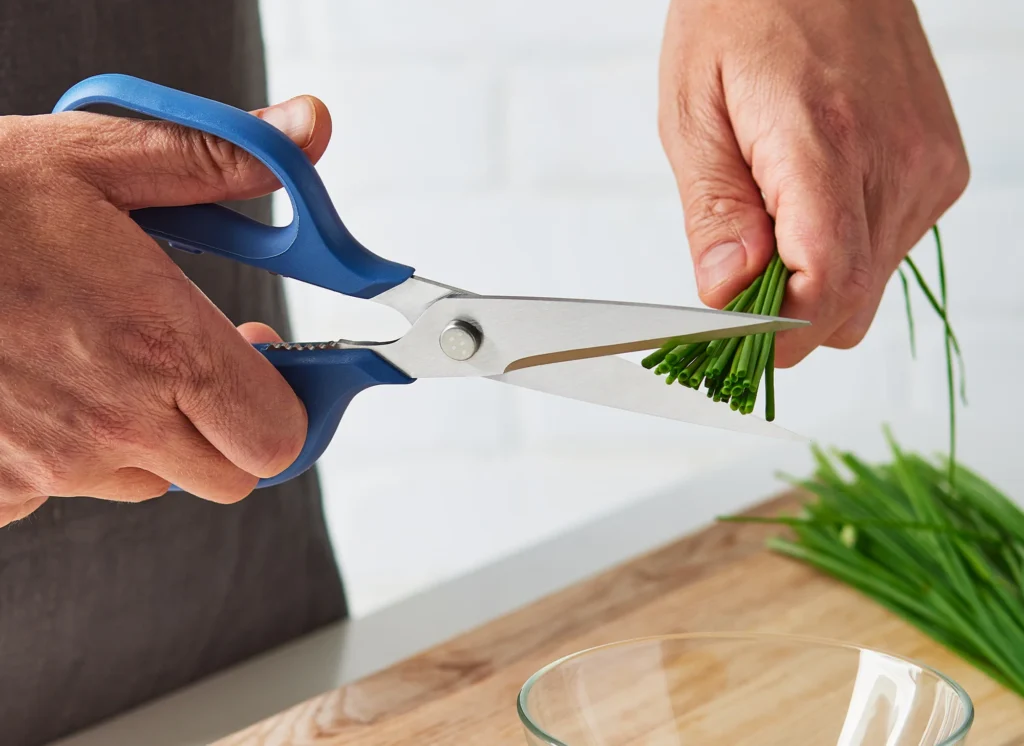
One particularly convenient technique is holding the herbs over the bowl, pot or pan and cutting them directly into the food.
This reduces the number of utensils you need and can make small quantities of herbs much quicker to prepare.
For delicate herbs, however, a sharp knife may still produce a cleaner result when you need finely chopped pieces.
3. Cutting Green Onions
Green onions are almost made for kitchen shears.
Instead of arranging them on a cutting board, you can hold several stalks together and snip them directly over a dish.
It’s fast, creates little mess and works particularly well for garnishes.
4. Opening Food Packaging
Kitchen shears are also useful for opening:
- Herb packets
- Plastic food bags
- Vacuum-sealed packaging
- Cardboard food boxes
- Parchment
- Kitchen twine
Using scissors instead of a knife can be safer when the packaging is awkward or when you don’t have a stable cutting surface.
One important rule: don’t use food-preparation shears for dirty non-food tasks and then return them to food preparation without thoroughly cleaning them.
Can Kitchen Shears Cut Pizza?
Yes, kitchen shears can cut pizza, although they’re not necessarily the best option for every pizza.
They work especially well for:
- Thin crust
- Flatbreads
- Tortillas
- Naan
- Pita
- Soft homemade pizza
For a very thick pizza with a rigid crust, a conventional pizza wheel may be easier.
Shears are particularly convenient when the pizza is already on a cutting board or when you want to cut a flatbread into smaller pieces.
Kitchen Shears vs. Kitchen Scissors
The terms are often used interchangeably, but designs can vary.
Kitchen scissors may refer to lighter-duty scissors intended for general food and kitchen tasks.
Kitchen shears typically suggest a stronger, heavier construction designed for more demanding cutting.
If you’re buying one pair for general home use, look for a model that combines:
- Sharp blades
- Strong construction
- Comfortable grip
- Easy cleaning
- Good corrosion resistance
The name on the packaging matters less than the actual construction.
Why Kitchen Shears Can Be Better Than a Knife
A knife remains one of the most important tools in any kitchen.
But knives aren’t ideal for every task.
Kitchen shears can have an advantage when:
The Food Is Slippery
Chicken skin, herbs and certain packaging materials can move unexpectedly under a knife.
Shears can provide a different kind of control because the blades close around the material.
The Cut Doesn’t Need to Be Perfectly Straight
If you’re trimming herbs, poultry or parchment, precision doesn’t necessarily require a knife.
You Want to Work Directly Over the Food
Snipping herbs over a bowl or pan can eliminate an entire preparation step.
The Task Is Small
Pulling out a cutting board and chef’s knife for two green onions can feel excessive.
A pair of shears can handle the job immediately.
What to Look for When Buying Kitchen Shears
Not every pair is worth buying.
If you’re choosing kitchen shears for regular use, pay attention to these features.
Stainless-Steel Blades
Stainless steel is a practical choice because it offers good resistance to corrosion and is suitable for repeated kitchen use.
Blade quality matters more than decorative features.
A cheap pair with poorly aligned blades can become frustrating very quickly.
Sharp, Properly Aligned Blades
The two blades should meet cleanly.
If they separate too far or slide past each other incorrectly, food can get crushed rather than cut.
When testing shears, look for smooth movement and consistent cutting from the base toward the tip.
Comfortable Handles
Kitchen shears require repeated squeezing.
A comfortable handle becomes especially important when trimming a large amount of poultry or preparing food for a gathering.
Look for:
- Rounded grip areas
- Non-slip surfaces
- Enough finger space
- Comfortable leverage
Don’t choose a pair simply because it has the sharpest-looking blades.
Detachable Blades
A detachable design can make cleaning substantially easier.
This is especially valuable if you regularly use your shears for raw poultry or meat.
Being able to separate the blades allows you to clean the hinge and contact surfaces more thoroughly.
Dishwasher Compatibility
Some kitchen shears are dishwasher-safe, but that doesn’t mean every manufacturer recommends frequent dishwasher cleaning.
Always follow the manufacturer’s care instructions.
High heat, detergents and prolonged moisture can affect certain finishes, handles and moving parts.
Do You Need Serrated Kitchen Shears?
Not necessarily.
Serrated sections can improve grip on slippery materials, but they can also make sharpening or cleaning more complicated depending on the design.
For general kitchen use, smooth, sharp cutting edges are often easier to maintain.
If you frequently work with slippery foods, however, a partially serrated design can be useful.
Are Multi-Function Kitchen Shears Worth It?
Some kitchen shears include:
- Nutcrackers
- Bottle openers
- Jar-opening grips
- Bone-cutting sections
- Fish-scale features
- Screwdriver-like tools
These can be convenient.
But there’s a trade-off.
A pair designed primarily for cutting may perform better than an inexpensive multi-tool that tries to do everything.
If your main goal is food preparation, prioritize cutting performance and hygiene before counting the number of extra features.
How to Clean Kitchen Shears Properly
Cleaning is particularly important when shears come into contact with raw meat.
After cutting raw poultry:
- Separate the blades if the design allows it.
- Wash both blades with hot, soapy water.
- Clean around the hinge carefully.
- Rinse thoroughly.
- Dry completely.
- Reassemble only when the components are dry.
Don’t simply rinse the blades and put them back in the drawer.
The hinge area can collect food particles that are easy to overlook.
For models that are dishwasher-safe, follow the manufacturer’s instructions.
How to Maintain Kitchen Shears
Good maintenance can make a quality pair last for years.
Keep the Hinge Clean
The hinge is one of the most important parts of the shears.
Food residue can make the action stiff and may contribute to corrosion.
Dry Them Thoroughly
Leaving moisture around the hinge can eventually lead to rust or deterioration.
Sharpen When Necessary
Kitchen shears eventually become dull.
Some can be sharpened at home, while others are better handled by a professional sharpening service.
Don’t assume that every sharpening tool designed for knives is suitable for scissors.
The blade geometry is different.
Don’t Cut Hard Materials
Avoid using food shears to cut:
- Wire
- Thick cardboard
- Plastic ties
- Metal
- Extremely hard bones
Doing so can damage the edge or misalign the blades.
Keep a separate household pair for non-food jobs.
Kitchen Shears and Food Safety
One of the most important distinctions is between food preparation and general household use.
If you use the same scissors to open a package, cut raw chicken and then trim a plant, cross-contamination becomes a concern.
Ideally, keep your kitchen shears exclusively for food and kitchen-related tasks.
If you do use them for packaging, clean them thoroughly before they come into contact with food.
This is especially important when handling raw poultry, which requires careful hygiene throughout preparation.
Three Kitchen-Shear Tricks Many People Overlook
Use Them to Cut Kitchen Twine
When tying poultry or securing herbs, shears are much more convenient than reaching for a knife.
Just make sure the twine is clean and intended for food use.
Cut Parchment to Fit a Pan
Rather than wrestling with a large sheet of parchment, kitchen shears can quickly create the exact size you need.
Cut Dried Fruit and Small Ingredients
Kitchen shears can be useful for cutting soft dried fruit, dates, bacon and other ingredients when a knife feels unnecessarily cumbersome.
For sticky foods, wipe and clean the blades immediately afterward.
Kitchen Shears vs. Chef’s Knife
You don’t have to choose one.
They perform different jobs.
| Task | Kitchen Shears | Chef’s Knife |
|---|---|---|
| Chopping vegetables | Good for small jobs | Excellent |
| Snipping herbs | Excellent | Excellent |
| Trimming poultry | Excellent | Good |
| Cutting packaging | Excellent | Not recommended |
| Slicing meat | Limited | Excellent |
| Cutting parchment | Excellent | Possible |
| Fine dicing | Limited | Excellent |
| Cutting green onions | Excellent | Excellent |
| Cutting flatbread | Excellent | Good |
The smartest approach is to use the right tool for the job.
Common Mistakes to Avoid
Buying the Cheapest Pair
Low-cost shears can work, but poor blade alignment and uncomfortable handles quickly become noticeable.
If you cook regularly, investing in a well-made pair is usually more sensible.
Ignoring Cleaning
Food residue around the hinge can become both a hygiene problem and a mechanical problem.
Using Kitchen Shears for Everything
They’re versatile, but they’re not universal.
Don’t force them to replace a chef’s knife, boning knife or heavy-duty poultry shears when those tools are more appropriate.
Cutting Through Hard Bones
This can damage the blades and hinge.
Use poultry shears specifically designed for heavier cutting when required.
Storing Them Wet
Dry them completely before storage.
Are Kitchen Shears Worth Buying?
For most people who cook regularly, yes.
You don’t need an expensive professional model to benefit from them.
A well-made pair can handle dozens of small tasks that would otherwise require a knife, cutting board or another specialized tool.
The biggest value isn’t that kitchen shears perform every kitchen task.
It’s that they make certain annoying tasks remarkably simple.
If you frequently prepare poultry, fresh herbs, green onions, flatbreads or packaged ingredients, the convenience can quickly justify the space they occupy in your kitchen drawer.
Final Verdict
Kitchen shears deserve more attention than they typically receive.
They’re useful for poultry, herbs, packaging, parchment, green onions, flatbreads and many other everyday preparation jobs. Their biggest advantage is convenience: they can make awkward cutting tasks easier while reducing the need to reach for a knife and cutting board.
When buying a pair, focus on sharp blades, solid construction, comfortable handles, corrosion resistance and easy cleaning rather than unnecessary features.
And remember that hygiene matters just as much as cutting performance. If you’re working with raw poultry or meat, clean the shears thoroughly after use and keep them separate from scissors used for general household tasks.
A good pair of kitchen shears won’t replace your knives.
It will simply make you wonder why you weren’t using them more often.
Frequently Asked Questions
What are kitchen shears mainly used for?
Kitchen shears are designed for a wide range of food-preparation tasks, including trimming poultry, snipping herbs, cutting green onions, opening food packaging and cutting parchment. Some heavy-duty models can handle more demanding jobs. Their main advantage is convenience and control.
Can kitchen shears cut chicken bones?
Some heavy-duty poultry shears are designed to cut through smaller poultry bones and joints, but ordinary kitchen shears may not be. Never force a lightweight pair through hard bones because you can damage the blades or hinge. Check the manufacturer’s specifications before attempting heavy-duty cutting.
Are kitchen shears better than scissors?
Kitchen shears are generally stronger and better suited to food preparation than ordinary household scissors. They often use food-appropriate materials and offer more leverage. However, quality varies, so the construction and blade alignment matter more than the name on the packaging.
Can kitchen shears go in the dishwasher?
Some kitchen shears are dishwasher-safe, while others are better washed by hand. Always follow the manufacturer’s instructions. Handwashing and thorough drying can help protect the blades, hinge and handles over time.
How do you sharpen kitchen shears?
Some kitchen shears can be sharpened using a suitable scissor-sharpening system, while others should be professionally sharpened. Don’t automatically use a standard knife sharpener because scissors have a different blade configuration. If the blades are detachable, follow the manufacturer’s sharpening guidance.
Are expensive kitchen shears worth it?
Not necessarily, but a well-made pair can offer better blade alignment, comfort, durability and easier maintenance. If you cook frequently, those differences can become noticeable over time. For occasional use, a reasonably priced, well-reviewed pair may be sufficient.