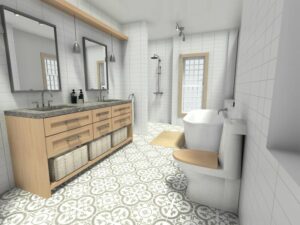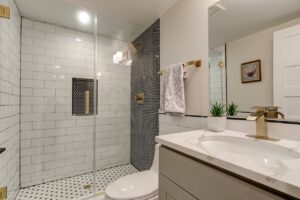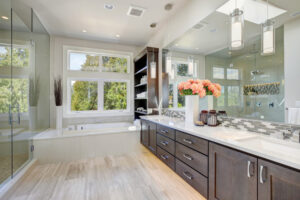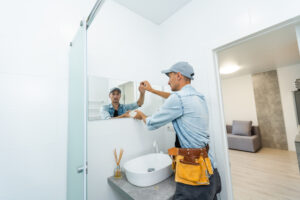
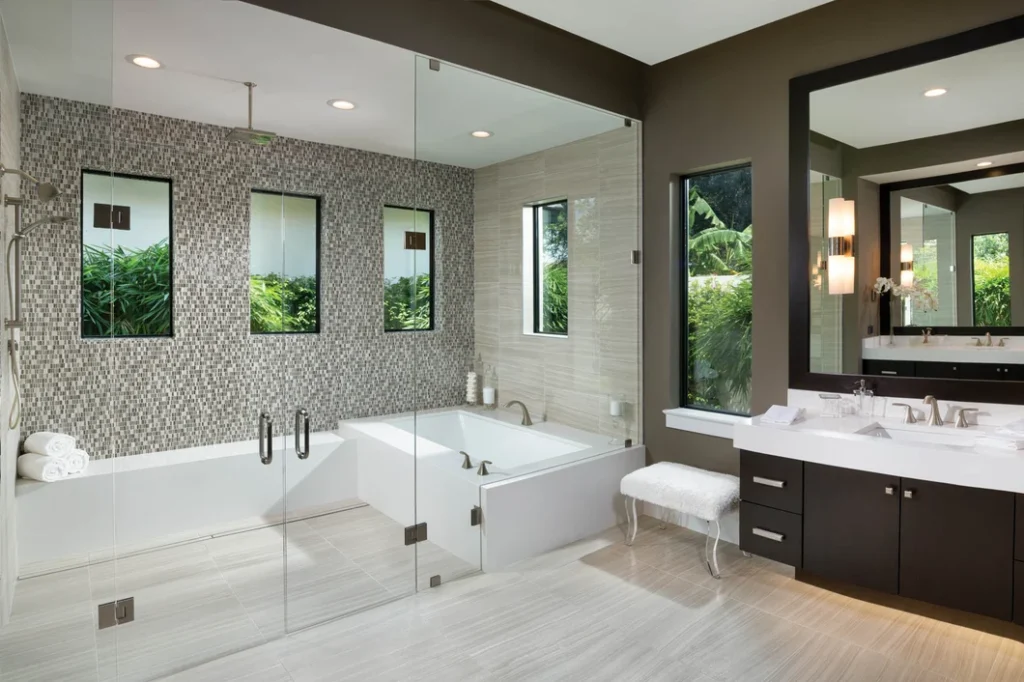

Imagine starting your morning in a bathroom that feels calm, warm, and beautifully organized instead of cramped and chaotic. Your feet meet a comfortable heated floor, the walk-in shower is already inviting, and everything you need is within easy reach. At night, the same room becomes a quiet place to unwind after a long day.
That is the appeal of a well-designed main bathroom.
Today, the main bathroom is no longer treated as a purely functional room. It can serve as a personal retreat while still handling the practical demands of everyday life. The best designs combine attractive finishes with smart storage, comfortable lighting, efficient plumbing, good ventilation, and a layout that works for the people using it.
Whether you’re planning a complete renovation or making a few targeted upgrades, you don’t need to copy an expensive hotel bathroom to create a luxurious feel. Often, the biggest improvements come from getting the fundamentals right.
Here are some practical main bathroom ideas to help you create a space that looks sophisticated, feels comfortable, and remains useful for years.
Why Good Main Bathroom Design Matters
A main bathroom has to do several jobs at once. It needs to support rushed weekday mornings, relaxing evening showers, personal grooming, storage, and sometimes shared use by two people.
That makes layout and functionality just as important as appearance.
Before choosing tiles or fixtures, think about how you actually use the room:
- Do two people get ready at the same time?
- Is there enough storage for toiletries and towels?
- Does the shower have adequate space?
- Is the toilet visually separated from the rest of the room?
- Can you move comfortably between the vanity, shower, tub, and toilet?
- Is there enough ventilation to control humidity?
- Does the lighting work for both grooming and relaxing?
A beautiful bathroom that lacks storage or has poor lighting quickly becomes frustrating. A slightly simpler bathroom with a thoughtful layout can feel much more luxurious every day.
1. Make the Walk-In Shower the Main Feature
For many homeowners, the shower is the most frequently used part of the main bathroom, making it a logical place to invest.
A spacious walk-in shower can create an open, contemporary appearance, particularly when paired with clear glass. Instead of filling the area with unnecessary visual barriers, a frameless or minimally framed enclosure can help the room feel larger.
Features worth considering
Depending on your space and budget, you could include:
- A rainfall showerhead
- A handheld shower wand
- A built-in shower niche
- A bench or compact seat
- Multiple water outlets
- Large-format wall tiles
- A linear drain
- Anti-slip flooring
- A thermostatic shower control
However, more features don’t automatically mean a better shower. For everyday use, good water pressure, easy cleaning, comfortable controls, and proper drainage are often more valuable than a long list of luxury accessories.
Practical tip
Position the shower controls near the entrance rather than directly beneath the showerhead. This allows you to turn on and adjust the water without immediately standing under cold water.
2. Choose a Freestanding Tub Only If You Will Use It
Freestanding tubs remain one of the most recognizable luxury bathroom features. Their sculptural shape can become a strong visual centerpiece, particularly in a large bathroom.
But there is an important practical question to ask before installing one:
Will you actually use the tub?
If you rarely take baths, the floor area may be better used for a larger shower, additional storage, or a more spacious vanity.
For homeowners who genuinely enjoy baths, however, a freestanding tub can transform the atmosphere of the room.
Popular options include:
- Slim contemporary tubs
- Deep soaking tubs
- Oval tubs
- Stone-look tubs
- Traditional clawfoot designs
Leave enough clearance around the tub for comfortable cleaning and movement. A beautiful tub squeezed into a small area can make the entire bathroom feel crowded.
3. Install a Double Vanity for Shared Bathrooms
A double vanity can make a noticeable difference when two people regularly use the bathroom at the same time.
Two sinks provide separate grooming zones, while a longer countertop creates additional space for everyday items.
But don’t automatically assume a double vanity is the best choice.
In a smaller bathroom, a well-designed single vanity with generous drawers can be more useful than two cramped sinks.
For a practical double vanity, consider:
- Deep drawers rather than only cupboards
- Separate electrical outlets
- Easy-to-clean countertop material
- Individual storage zones
- Mirror lighting for each sink
- Drawer organizers
- A countertop with enough landing space
A floating vanity can also make the floor appear more open and can simplify cleaning underneath.
4. Use Layered Lighting Instead of One Bright Ceiling Light
Lighting is one of the easiest ways to improve a main bathroom, yet it is often overlooked.
A single overhead fixture creates shadows around the face, which is inconvenient when shaving, applying makeup, or doing skincare.
A better approach is layered lighting.
Ambient lighting
Provides general illumination throughout the room.
Examples include:
- Recessed ceiling lights
- Flush-mount fixtures
- Cove lighting
Task lighting
Provides focused light where you need it.
Good locations include:
- Beside the vanity mirror
- Around the grooming area
- Inside certain storage zones
Accent lighting
Adds atmosphere rather than serving as the primary light source.
Examples include:
- Under-vanity LED lighting
- Backlit mirrors
- Architectural strip lighting
- Wall sconces
Whenever possible, install dimmers so the bathroom can shift from bright morning lighting to softer evening illumination.
5. Add Heated Floors for Everyday Comfort
Heated bathroom floors are one of those upgrades that may seem unnecessary until you experience them.
Radiant floor heating can make cold tile much more comfortable, particularly during winter mornings.
Electric systems are commonly installed beneath suitable flooring materials, while hydronic systems circulate heated water through tubing. The best option depends on the home’s heating system, floor construction, room size, and renovation budget.
Before installing heated flooring
Check:
- Whether the existing floor can accommodate the system
- How much additional floor height will be created
- Whether the flooring material is compatible
- Where the thermostat will be located
- Whether professional installation is required
A programmable thermostat can also allow the floor to warm according to your daily routine rather than running continuously.
6. Create a Vanity Area That Doesn’t Become Cluttered
Luxury isn’t only about expensive materials. A clutter-free countertop often makes a greater visual difference.
Think about what normally ends up on the vanity:
- Toothbrushes
- Skincare products
- Hair tools
- Cosmetics
- Electric shavers
- Soap
- Towels
- Cleaning supplies
Then design storage around those items.
Deep drawers are particularly useful because they allow you to organize products without stacking everything in the back of a cabinet.
A combination of drawers, cabinets, and concealed electrical outlets can keep frequently used appliances accessible without leaving them permanently visible.
A useful design trick
Keep everyday products in the easiest-to-reach drawers and reserve higher or less accessible storage for items you use occasionally.
This small organizational decision can make the bathroom feel dramatically more convenient.
7. Choose Bathroom Materials for Moisture, Not Just Appearance
A material may look beautiful in a showroom but perform poorly in a humid bathroom.
When selecting finishes, consider:
- Moisture resistance
- Slip resistance
- Cleaning requirements
- Durability
- Grout maintenance
- Compatibility with bathroom conditions
Large-format tiles can reduce the number of grout joints and create a cleaner appearance. Smaller tiles, meanwhile, can provide more flexibility on curved or sloped surfaces and can offer useful slip-resistant patterns depending on the product.
Natural stone can create a sophisticated appearance but may require more maintenance than porcelain or other engineered alternatives.
The best material isn’t necessarily the most expensive one. It is the one that matches your lifestyle and willingness to maintain it.
8. Make Storage Part of the Architecture
One of the most effective main bathroom ideas is to stop treating storage as an afterthought.
Instead of adding random cabinets after the layout is complete, incorporate storage from the beginning.
Useful options include:
- Recessed medicine cabinets
- Built-in shower niches
- Tall linen cabinets
- Vanity drawers
- Under-sink storage
- Recessed wall shelving
- Hidden laundry hampers
A recessed medicine cabinet can be especially useful because it provides storage without extending significantly into the room.
If you’re renovating, also think about where towels will actually be used. A towel rail positioned too far from the shower may look fine on a plan but become inconvenient every day.
9. Consider a Separate Toilet Zone
If space allows, creating some separation around the toilet can make a shared main bathroom feel more comfortable.
You don’t necessarily need a completely enclosed room. A partial wall, frosted glass panel, strategically positioned vanity, or short partition can provide visual privacy while preserving an open feel.
This is particularly useful in bathrooms shared by couples.
The goal is not to hide the toilet at all costs. It’s to create a layout in which one person can use one part of the bathroom while another person is using another area.
10. Bring in Natural Materials and Warm Finishes
Bathrooms can easily become visually cold when they contain only white tile, chrome fixtures, and glossy surfaces.
Adding warmer materials can make the room feel more inviting.
Consider:
- Natural or wood-look cabinetry
- Warm-toned stone
- Textured wall finishes
- Brushed metal hardware
- Woven baskets
- Soft textiles
- Simple greenery suitable for humid environments
You can still maintain a modern bathroom without making it feel sterile.
A useful approach is to combine a relatively neutral base with a few warmer elements that can be changed later.
11. Use Mirrors to Improve Both Function and Space
A mirror is essential in a main bathroom, but its size, shape, and lighting can significantly affect the overall design.
A large mirror can visually expand a compact room and reflect light across the space.
For double vanities, you can choose:
- One large mirror spanning both sinks
- Two individual mirrors
- A custom built-in mirror
- Medicine cabinets with mirrored fronts
Backlit mirrors can provide soft ambient illumination, but they should not replace properly positioned task lighting if the mirror is used for detailed grooming.
12. Add Smart Bathroom Features Carefully
Smart technology can make a bathroom more convenient, but not every gadget is worth installing.
Useful upgrades can include:
- Heated toilet seats
- Bidet functions
- Automatic or touchless flushing
- Smart shower controls
- Mirror defoggers
- Programmable floor heating
- Motion-activated night lighting
Smart showers can be particularly convenient because some systems allow users to save preferred temperatures or control water flow.
However, technology should support the bathroom rather than dominate it. Before choosing a connected fixture, consider how easy it will be to maintain if the electronics fail several years later.
13. Don’t Forget Ventilation
This is one of the least glamorous bathroom upgrades—and one of the most important.
A beautiful bathroom with poor ventilation can develop condensation, unpleasant odors, peeling finishes, and moisture-related problems.
A properly sized exhaust fan helps remove humid air from the room.
For the best results:
- Use the exhaust fan during showers
- Continue running it afterward
- Make sure moist air is properly vented
- Keep the bathroom door or airflow path appropriate for the ventilation system
- Clean the fan and grille periodically
If you’re remodeling, ventilation is something to solve before the walls and ceilings are finished, not after.
14. Design for the Future, Not Just Today’s Trends
A bathroom renovation can last for many years, so avoid designing the entire space around a trend that may quickly feel dated.
Instead, use permanent elements for longevity and accessories for personality.
For example:
Long-term choices
- Quality plumbing fixtures
- Durable flooring
- Good ventilation
- Functional cabinetry
- Neutral architectural finishes
Easier-to-change choices
- Paint colors
- Towels
- Decorative accessories
- Small lighting accents
- Artwork
- Hardware
This approach gives you flexibility without requiring another major renovation when your tastes change.
Common Main Bathroom Design Mistakes
Even expensive renovations can go wrong when practical details are overlooked.
Choosing style before layout
A beautiful freestanding tub doesn’t help if it blocks circulation.
Underestimating storage
Minimalist bathrooms still need somewhere to put everyday products.
Using only overhead lighting
This often creates unflattering shadows around the vanity.
Ignoring ventilation
Humidity can damage finishes and contribute to long-term maintenance problems.
Installing too many trendy features
A bathroom filled with competing finishes can quickly look dated.
Forgetting cleaning and maintenance
Consider how easily you can clean the shower glass, grout, vanity, fixtures, and flooring before committing to a design.
How to Plan a Main Bathroom Remodel
If you’re starting a renovation, use this order rather than choosing finishes randomly.
- Measure the room carefully.
- Determine whether plumbing locations will remain or change.
- Decide how the space should function.
- Plan storage before selecting decorative finishes.
- Choose the shower, tub, toilet, and vanity sizes.
- Plan electrical outlets and lighting locations.
- Address ventilation and waterproofing.
- Select flooring and wall materials.
- Choose hardware and fixtures.
- Finish with accessories and decorative details.
This sequence helps prevent an expensive mistake: selecting a beautiful fixture that doesn’t actually work with the available space.
How to Make a Small Main Bathroom Feel Larger
You don’t necessarily need to enlarge the room to make it feel more spacious.
Try:
- Clear glass shower panels
- A wall-mounted vanity
- Large-format tiles
- Light-colored walls
- A large mirror
- Consistent flooring
- Recessed storage
- Minimal visual clutter
Keeping the same or similar flooring throughout the room can also create visual continuity.
Most importantly, avoid filling every available wall with furniture. Empty visual space is valuable in a small bathroom.
The Best Luxury Is Convenience
The most successful main bathrooms aren’t necessarily the ones with the most expensive fixtures.
They’re the ones that make everyday routines easier.
A heated floor is useful because it improves comfort. A shower niche is useful because it keeps products organized. Good vanity lighting is useful because it helps you see clearly. A well-designed drawer system is useful because it eliminates countertop clutter.
That is what makes a bathroom feel luxurious over time: small conveniences that you appreciate every single day.
FAQ
What should a main bathroom include?
A well-designed main bathroom typically includes a comfortable shower, toilet, vanity, sufficient storage, effective lighting, and good ventilation. Depending on available space and personal preferences, you can also add a freestanding tub, double vanity, heated floors, or smart fixtures.
Is a freestanding tub worth it in a main bathroom?
It depends on how often you take baths and how much space you have. A freestanding tub can provide a strong visual centerpiece and a relaxing bathing experience, but it may not be worthwhile if it reduces useful shower, storage, or circulation space.
What makes a main bathroom look luxurious?
Luxury comes from a combination of proportion, materials, lighting, organization, and comfort. Features such as a spacious shower, quality fixtures, layered lighting, heated flooring, attractive cabinetry, and uncluttered surfaces can create a high-end atmosphere without requiring every element to be expensive.
How can I make my main bathroom more functional?
Start with the layout and identify how the bathroom is used each day. Prioritize adequate storage, easy-to-reach towels, good lighting, comfortable circulation, reliable ventilation, and enough countertop space. Function should be solved before decorative finishes are selected.
Are smart bathroom features worth the money?
Some are, particularly features that improve comfort or convenience, such as programmable floor heating, bidet functions, shower temperature controls, or mirror defoggers. Choose technology selectively and consider maintenance, replacement costs, and whether the feature will still be useful several years from now.
What is the biggest mistake when remodeling a main bathroom?
One of the biggest mistakes is focusing on appearance while overlooking everyday functionality. A bathroom can look impressive in photographs but become frustrating if it lacks storage, has poor lighting, inadequate ventilation, awkward circulation, or difficult-to-clean materials.
Conclusion
The best main bathroom ideas aren’t about copying the most luxurious bathroom you’ve seen online. They’re about creating a room that fits your routines, your home, and your personal definition of comfort.
A spacious walk-in shower may be more valuable to you than a bathtub. Someone else may consider a deep soaking tub essential. A double vanity can transform mornings for couples, while a thoughtfully designed single vanity may be better for a smaller space.
Start with the fundamentals: layout, storage, lighting, ventilation, waterproofing, and durable materials. Then add the features that make the room feel special, whether that’s heated flooring, a statement tub, smart controls, warm cabinetry, or carefully chosen lighting.
When every element has a purpose, your main bathroom becomes more than a beautiful room. It becomes a space that makes everyday life a little easier—and a lot more enjoyable.