
A plain wall can make a room feel unfinished, cold, or lacking personality. That is why many homeowners, designers, and architects are turning toward a timeless solution: the wood panel wall.
Wood has always had a special place in interior design because it brings something painted surfaces cannot easily replicate—natural texture, warmth, and character. Whether used in a modern apartment, a cozy bedroom, a luxury office, or a rustic living room, wood paneling can completely change the atmosphere of a space.
Today’s wood panel walls are far different from older styles that covered entire rooms with heavy wooden surfaces. Modern designs include elegant slatted panels, minimalist accent walls, geometric patterns, reclaimed wood features, and sustainable materials.
But choosing the right wood panel wall requires more than simply picking a design you like. Factors such as room size, lighting, humidity, maintenance, and budget all influence the final result.
This guide explains everything you need to know about wood panel walls, including styles, benefits, materials, installation tips, costs, and common mistakes to avoid.
What Is a Wood Panel Wall?
A wood panel wall is an interior wall surface covered partially or completely with wooden panels for decorative or functional purposes.
These panels can be made from different materials, including:
- Solid hardwood
- Engineered wood
- MDF panels
- Veneer panels
- Reclaimed wood
Unlike traditional painted walls, wood paneling adds physical texture and depth to a room.
Modern wood panel walls can be used for:
- Living room feature walls
- Bedroom headboard walls
- Office interiors
- TV walls
- Restaurant interiors
- Hallways
- Ceilings
The design possibilities range from simple horizontal boards to complex artistic patterns.
Why Wood Panel Walls Are Popular Again
Wood paneling has existed for centuries, but modern design has reinvented it.
The current popularity comes from several trends:
- Interest in natural materials
- Demand for warmer interiors
- Growth of minimalist design
- Increased focus on sustainable materials
- Desire for unique statement walls
People are moving away from completely flat, empty surfaces and choosing materials that add personality.
Benefits of Installing a Wood Panel Wall
1. Creates a Warm and Inviting Atmosphere
One of the biggest advantages of wood is its natural warmth.
Unlike concrete, glass, or plain drywall, wood introduces organic texture into a room.
It can make spaces feel:
- More comfortable
- More relaxing
- More connected to nature
This is especially useful in modern homes where clean designs sometimes feel too cold.
2. Adds Texture and Visual Interest
A wood panel wall instantly becomes a design feature.
Different patterns create different moods:
- Vertical slats make ceilings appear taller
- Horizontal panels make rooms feel wider
- Dark wood creates luxury
- Light wood creates openness
Even a single accent wall can completely change a room.
3. Improves Acoustic Comfort
Wood naturally helps manage sound.
While it does not completely soundproof a room, properly designed wood panels can reduce echoes and improve acoustic comfort.
They are often used in:
- Home theaters
- Music rooms
- Offices
- Conference spaces
Slatted wood panels with acoustic backing are especially popular for this purpose.
4. Long-Term Durability
High-quality wood panel walls can last for many years when properly maintained.
Compared with painted walls, wood is less likely to suffer from:
- Peeling paint
- Surface fading
- Minor wall damage
A damaged wooden panel can often be repaired or refinished instead of replacing the entire wall.
5. Sustainable Design Options
Many homeowners are choosing environmentally responsible materials.
Eco-friendly options include:
- Reclaimed wood
- FSC-certified wood
- Recycled wood products
These choices reduce waste while creating unique interiors.
6. Increases Design Flexibility
Wood panels work with many interior styles:
- Modern
- Scandinavian
- Industrial
- Rustic
- Traditional
- Luxury contemporary
This flexibility is one reason designers continue using wood as a major material.
Popular Types of Wood Panel Walls
1. Shiplap Wood Panels
Shiplap is one of the most recognizable wood wall styles.
It features horizontal boards with small gaps between each panel.
Popular in:
- Farmhouse interiors
- Coastal homes
- Cottage designs
Common finishes include:
- White painted wood
- Natural oak
- Weathered finishes
Shiplap creates a clean and relaxed appearance.
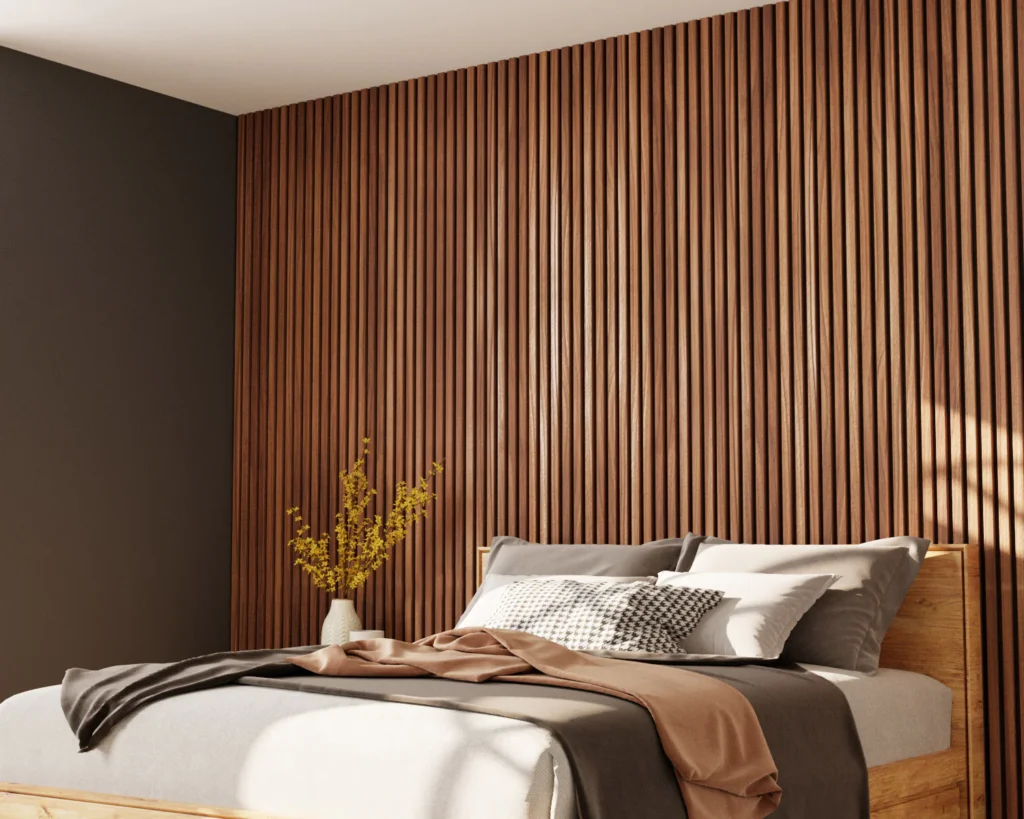
2. Slatted Wood Panels
Slatted panels have become extremely popular in modern interiors.
They consist of narrow wooden strips installed with equal spacing.
Benefits include:
- Modern appearance
- Better sound absorption when combined with acoustic backing
- Strong visual impact
They are commonly used behind:
- TVs
- Beds
- Office desks
- Reception areas
3. Reclaimed Wood Panels
Reclaimed wood offers a unique appearance because every piece has its own history.
Characteristics include:
- Natural imperfections
- Color variation
- Visible grain
- Aged appearance
This style works well for rustic and industrial interiors.
4. Beadboard Panels
Beadboard features narrow vertical grooves.
It is commonly used for:
- Wainscoting
- Bathrooms
- Hallways
- Traditional interiors
It adds subtle texture without overwhelming a room.
5. Geometric Wood Panel Designs
For homeowners who want something more artistic, geometric designs create a dramatic effect.
Popular patterns include:
- Herringbone
- Chevron
- Hexagonal designs
- Custom arrangements
These work especially well as statement walls.
6. 3D Wood Wall Panels
Three-dimensional panels create depth through raised designs.
They can transform ordinary walls into architectural features.
Common uses include:
- Luxury homes
- Hotels
- Modern offices
How to Use Wood Panel Walls in Different Rooms
Living Room
A wood panel accent wall behind a television or sofa can become the main design feature.
Popular choices:
- Dark walnut for luxury
- Oak for warmth
- Slatted panels for modern style
Bedroom
Wood panels behind the bed create a natural headboard effect.
Advantages:
- Adds comfort
- Creates a relaxing atmosphere
- Makes the bed area feel more complete
Home Office
Wood panel walls can make workspaces feel more professional and comfortable.
Acoustic wood panels are especially useful in offices.
Dining Area
Wood adds warmth to dining spaces and works well with:
- Natural lighting
- Modern furniture
- Minimal decoration
Installation Methods
Wood panels can be installed in different ways.
Direct Wall Installation
Panels are attached directly to the existing wall.
Advantages:
- Simple process
- Lower cost
- Suitable for flat walls
Frame Installation
A wooden frame is installed first, then panels are attached.
Benefits:
- Better insulation options
- Easier leveling
- Space for wiring
DIY Installation
Some wood panel systems are designed for homeowners.
DIY works best when:
- Walls are already prepared
- Panels are lightweight
- Basic tools are available
Complex patterns usually require professional installation.
Wood Panel Wall Cost Guide
The total cost depends on:
- Material choice
- Wall size
- Design complexity
- Installation method
Typical expenses include:
Materials
Basic panels may cost less, while premium options such as hardwood or reclaimed wood cost more.
Installation
Professional installation increases the budget but often provides better finishing quality.
Custom Designs
Geometric patterns and handmade features usually require additional labor.
A simple accent wall is usually much more affordable than covering an entire room.
Maintenance and Care Tips
Wood panel walls are relatively easy to maintain.
Regular Dusting
Use:
- Microfiber cloth
- Soft brush
- Vacuum attachment
Avoid abrasive cleaning tools.
Control Moisture
Wood reacts to humidity.
Avoid installing untreated wood in areas with excessive moisture unless properly protected.
Protect the Finish
Depending on the material, wood may require:
- Oil treatment
- Sealant
- Protective coating
Repair Minor Damage
Small scratches can often be repaired through:
- Light sanding
- Refinishing
- Touch-up products
Common Mistakes When Installing Wood Panels
Choosing the Wrong Wood Color
Dark wood can make small rooms feel smaller.
Light wood often works better in compact spaces.
Ignoring Lighting
Wood changes appearance depending on natural and artificial lighting.
Always consider how the room looks throughout the day.
Overusing Wood
Covering every wall with heavy wood panels can make a room feel outdated.
Modern designs often use wood strategically as an accent.
Forgetting Moisture Conditions
Some wood materials are unsuitable for humid environments without proper treatment.
FAQ
Are wood panel walls still modern?
Yes. Modern wood panel walls are widely used because they combine natural materials with contemporary design styles.
Are wood panels expensive?
The cost depends on the material and installation. Simple panels are affordable, while custom hardwood designs can be significantly more expensive.
Can wood panels be installed over existing walls?
Yes. Many wood panels can be installed over drywall or existing surfaces if the wall is properly prepared.
Do wood panel walls require a lot of maintenance?
No. Regular dusting and occasional refinishing are usually enough to maintain their appearance.
Are wood panel walls good for small rooms?
Yes, but choosing the right style matters. Light-colored wood and vertical designs can help small rooms feel larger.
Conclusion
A wood panel wall is more than a decorative feature. It is a design solution that adds warmth, texture, personality, and long-term value to interiors.
From simple shiplap designs to modern acoustic slatted panels, wood walls can adapt to almost any style preference.
The key is choosing the right material, pattern, and placement for your space.
When thoughtfully designed, a wood panel wall does not just change how a room looks—it changes how the room feels.