
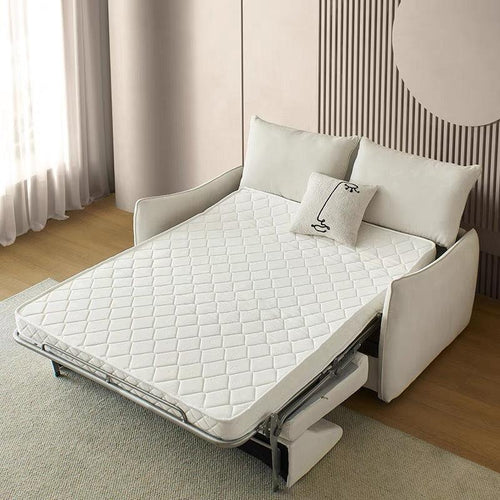

A sofa bed can be one of the most practical pieces of furniture in a home. During the day, it works as a comfortable place to sit; at night, it can become a guest bed or even a regular sleeping surface. But there is one component that often determines whether the experience is comfortable or disappointing: the sofa bed mattress.
A mattress that is too thin can make the frame underneath noticeable. One that is too thick may prevent the sofa from folding correctly. A material that feels comfortable in a showroom may also sleep too warm or lack enough support for regular use.
Choosing a replacement mattress therefore requires more than simply buying the thickest or softest option available.
This guide explains the main types of sofa bed mattresses, how to measure your sleeper correctly, which materials work best for different situations, what to look for when replacing an old mattress, and the mistakes worth avoiding. Whether the bed is used every night or only when guests arrive, the right mattress can make a significant difference.
What Is a Sofa Bed Mattress?
A sofa bed mattress is a mattress specifically designed to work with a convertible sofa or sleeper mechanism.
Unlike a conventional bed mattress, it has to work within the physical limitations of the sofa. Depending on the design, the mattress may need to fold, bend, compress, or remain in a compact space when the sofa is converted back into seating.
Traditional sofa bed mattresses are often thinner than standard residential mattresses, although modern designs vary considerably.
The most important point is this:
A replacement mattress must be compatible with the sofa bed’s frame and folding mechanism.
A mattress can be comfortable on its own but unsuitable for a particular sleeper sofa.
Why Sofa Bed Mattresses Can Be Uncomfortable
Older sleeper sofas often have a reputation for being uncomfortable. In many cases, the problem is not simply the mattress material.
Several factors can contribute to discomfort:
- A thin mattress provides limited cushioning.
- The support frame may be felt through the mattress.
- Older foam may have compressed unevenly.
- Innerspring units can create pressure points.
- The mattress may be incorrectly sized.
- The folding mechanism may place pressure on particular areas.
- The sleeping surface may be too soft or too firm for the user.
This is why replacing the mattress alone does not always solve every problem. If the underlying frame is damaged, bent, or excessively uneven, even a high-quality mattress may not perform as expected.
Main Types of Sofa Bed Mattresses
Different materials provide different combinations of comfort, support, temperature control, durability, and price.
1. Memory Foam
Memory foam is a popular choice for replacement sofa bed mattresses because it can provide pressure relief without relying on traditional metal coils.
The material responds to body weight and generally conforms to the sleeper.
Advantages:
- Good pressure relief
- Quiet when changing positions
- No traditional coil sensation
- Available in different firmness levels
- Often comfortable for side sleepers
Potential drawbacks:
- Can retain heat depending on the foam construction
- Very soft foam may not provide enough support
- Foam quality varies considerably between models
Memory foam can be a particularly attractive option when the sofa bed is used regularly, provided the mattress is compatible with the sleeper mechanism.
2. Innerspring
Innerspring sofa bed mattresses use metal coils to provide support.
They are often found in traditional sleeper sofas and can provide a familiar, firmer feel.
Advantages:
- Traditional mattress feel
- Good airflow through the coil structure
- Can feel supportive for some sleepers
- Often relatively affordable
Potential drawbacks:
- The coils may become noticeable with a thin comfort layer
- Older designs can create pressure points
- Movement can sometimes be transferred across the mattress
For occasional guests, a traditional innerspring mattress may still be perfectly adequate.
3. Gel-Infused Foam
Some foam mattresses use gel or other cooling components as part of their construction.
The goal is generally to improve temperature management while retaining some of the pressure-relieving characteristics of foam.
However, the presence of “gel” does not automatically mean that a mattress will sleep cool. Overall foam density, ventilation, cover material, room temperature, and the sleeper’s own heat sensitivity all influence temperature.
4. Hybrid Construction
Hybrid sofa bed mattresses combine different materials, such as foam and spring-based support.
The goal is to provide a balance between cushioning and structural support.
A hybrid can be appealing when the sofa bed is used frequently, but compatibility is especially important. The mattress must be designed to work with the specific folding or convertible mechanism.
5. Latex Foam
Latex is another material sometimes used in mattress construction.
It tends to have a more responsive feel than conventional memory foam and can make it easier to change sleeping positions.
However, latex mattresses can be heavier and less flexible than some foam alternatives. That can make them unsuitable for certain sofa bed mechanisms.
Always check the manufacturer’s compatibility requirements before choosing a latex replacement.
Which Sofa Bed Mattress Is Best?
There is no single best mattress for every sleeper.
The right choice depends mainly on how often the bed is used, the sleeper’s preferences, and the sofa’s construction.
| Use case | Mattress characteristics to prioritize |
|---|---|
| Occasional guests | Good basic comfort and durability |
| Frequent overnight use | Better pressure relief and support |
| Daily sleeping | Higher-quality construction and appropriate support |
| Hot sleepers | Breathable materials and good airflow |
| Side sleepers | Pressure relief around shoulders and hips |
| Back sleepers | Balanced support and stable surface |
| Heavier sleepers | Stronger support and durable construction |
The key is to match the mattress to the actual use rather than buying based on marketing claims alone.
Measure Before Buying
One of the most common mistakes when replacing a sofa bed mattress is buying based only on the advertised bed size.
A “queen” sofa bed does not necessarily have exactly the same mattress dimensions as every other queen sleeper.
Before ordering a replacement, measure the existing mattress and the sleeper frame.
Record:
- Mattress width
- Mattress length
- Mattress thickness
- Frame dimensions
- Available clearance when the sofa is folded
If possible, check the sofa manufacturer’s recommended mattress dimensions.
Why Thickness Matters
Thickness is especially important with convertible furniture.
A mattress that is too thick may interfere with the folding mechanism. It may prevent the sofa from closing properly or place excessive pressure on the frame.
A mattress that is too thin can leave the sleeper feeling the support structure underneath.
Therefore, thicker does not automatically mean better.
The correct thickness is the one that provides sufficient cushioning while remaining compatible with the mechanism.
Consider the Sofa Bed Mechanism
Not all sofa beds operate in the same way.
Some use a traditional pull-out frame. Others fold in different sections or use more modern convertible designs.
The mattress needs to move naturally with the mechanism.
Before replacing it, check:
- Where the mattress folds
- Whether it bends in multiple places
- Whether the frame has a fixed thickness limit
- Whether the original mattress has a special construction
- Whether the manufacturer permits replacement mattresses
This step can prevent an expensive compatibility problem.
Daily Use vs Occasional Use
How often the mattress will be slept on should strongly influence your decision.
For Occasional Guests
If the sofa bed is used a few nights per year, you may not need the most expensive mattress.
Focus on:
- Reasonable comfort
- Good support
- Appropriate dimensions
- Reliable construction
- Easy maintenance
For Frequent Use
If guests regularly sleep on it, comfort becomes much more important.
A better-quality foam or compatible hybrid construction may provide a more comfortable experience than an inexpensive traditional mattress.
For Everyday Sleeping
If the sofa bed is effectively your main bed, be more selective.
Pay close attention to:
- Support
- Pressure relief
- Durability
- Sleeping temperature
- Firmness
- Body weight
- Sleeping position
A sofa bed mattress designed primarily for occasional use may not provide the long-term support required for nightly sleeping.
Choose Firmness Based on Your Sleeping Position
Firmness is personal, but sleeping position can provide a useful starting point.
Side Sleepers
Side sleepers often benefit from enough cushioning around the shoulders and hips to reduce pressure.
A very firm, thin mattress can feel uncomfortable because those areas receive substantial pressure.
Back Sleepers
Back sleepers generally need a balance between cushioning and support.
A mattress that allows the hips to sink excessively can create an uncomfortable sleeping position.
Stomach Sleepers
Stomach sleepers often prefer a more supportive surface that does not allow excessive sinking through the midsection.
The important point is not to choose firmness based solely on a label. Construction and body weight can change how firm the mattress actually feels.
Don’t Ignore Temperature
A sofa bed can sometimes sleep differently from a conventional bed.
Because the mattress is often thinner and may sit closer to the frame, airflow can be different.
Foam can also retain some body heat depending on its construction.
If you regularly sleep hot, look for a design with:
- Breathable materials
- Good airflow
- A suitable cover
- Less heat-retentive construction
A “cooling” label should not be the only reason to buy a mattress. Look at the overall construction instead.
Durability Matters More Than Appearance
A new mattress can feel excellent initially but still deteriorate quickly if its materials are poor.
For a sofa bed, durability is particularly important because the mattress may repeatedly bend or fold.
Signs of a potentially durable design include:
- Consistent material quality
- Adequate structural support
- Good edge construction where appropriate
- A cover that can withstand regular handling
- Construction specifically intended for the sleeper format
Avoid assuming that the most expensive option is automatically the most durable.
Common Mistakes to Avoid
Buying the Wrong Size
This is the easiest mistake to prevent.
Measure first and compare the measurements with the manufacturer’s specifications.
Choosing Maximum Thickness
More thickness can sound attractive, but a thick mattress may not fold correctly.
Compatibility comes first.
Ignoring the Frame
If the frame is bent or damaged, a new mattress may not solve the problem.
Inspect the entire sleeping system.
Choosing Based Only on Price
A cheap mattress may save money initially but become uncomfortable quickly.
Conversely, the most expensive mattress may be unnecessary for an occasional guest bed.
Think about expected use before setting the budget.
Forgetting About Weight
A mattress should provide appropriate support for the person using it.
A very soft construction may feel comfortable for one sleeper but insufficiently supportive for another.
Buying Without Checking the Return Policy
Mattress comfort is difficult to predict from specifications alone.
If possible, choose a seller or manufacturer with a reasonable return or trial policy.
How to Make an Existing Sofa Bed More Comfortable
Replacing the mattress is not always the first step.
If the mattress is still in good condition, consider whether the discomfort comes from the frame or the sleeping environment.
Useful improvements may include:
- A properly fitted mattress protector
- Suitable bedding
- Checking the frame for damaged components
- Ensuring the mattress is positioned correctly
- Replacing severely worn components
- Improving the room temperature and ventilation
A thin topper may sometimes improve surface comfort, but there is an important limitation: a topper can change how the mattress feels, but it cannot fix a fundamentally unsuitable or damaged sleeper mechanism.
It can also create a folding problem if there is not enough clearance.
How to Maintain a Sofa Bed Mattress
Proper care can help extend its useful life.
Keep It Clean
Use a suitable mattress protector to reduce exposure to spills, sweat, dust, and stains.
Follow Cleaning Instructions
Do not soak a foam mattress unless the manufacturer specifically permits it.
Spot-clean according to the care instructions and allow the surface to dry thoroughly.
Check for Uneven Wear
If the design allows it, repositioning the mattress periodically can help distribute wear.
However, do not rotate or flip it if the manufacturer specifically prohibits doing so.
Inspect the Frame
Every so often, check the folding mechanism and support structure.
If the frame develops a sharp edge, broken support, or unusual movement, stop using the sleeper until the issue is addressed.
How Long Does a Sofa Bed Mattress Last?
There is no universal lifespan.
Actual durability depends on:
- Material quality
- Frequency of use
- Sleeper weight
- Folding frequency
- Frame construction
- Maintenance
- Environmental conditions
An occasional guest mattress can remain useful for years with relatively little wear, while a sofa bed used every night can deteriorate much faster.
The best indicator is condition rather than age alone.
Consider replacement if you notice:
- Permanent sagging
- Visible damage
- Uneven support
- Significant loss of cushioning
- Exposed or damaged components
- Persistent discomfort that was not present originally
Should You Buy a Replacement Mattress or a New Sofa Bed?
Sometimes replacing the mattress makes perfect sense.
It can be worthwhile when:
- The frame is still sturdy
- The upholstery is in good condition
- The mechanism works properly
- The mattress is the main source of discomfort
A new sofa bed may make more sense when the mechanism is damaged, the frame is unstable, or the furniture has reached the end of its useful life.
Think of the mattress and sofa frame as one system.
Replacing only one component is not always the best long-term solution.
A Simple Buying Checklist
Before purchasing a sofa bed mattress, check these points:
- Measure the existing mattress.
- Confirm the correct width and length.
- Check the maximum compatible thickness.
- Identify the sofa bed mechanism.
- Consider how frequently it will be used.
- Choose material based on comfort and support.
- Consider sleeping position and body weight.
- Check the mattress’s folding flexibility.
- Inspect the sofa frame.
- Review the warranty and return conditions.
- Avoid choosing purely by thickness or price.
This checklist can save you from buying a mattress that looks good on paper but does not actually work with your sofa.
FAQ
Can you replace a sofa bed mattress?
Yes, many sofa beds allow the mattress to be replaced, but compatibility varies between designs. The replacement needs to match the required dimensions and thickness and must work with the folding mechanism. Always check the manufacturer’s specifications before purchasing.
What type of mattress is best for a sofa bed?
Memory foam is a popular choice because it can provide pressure relief without traditional springs. However, innerspring and hybrid designs can also work well depending on the sleeper and the sofa mechanism. The best option is the one that combines appropriate support, comfort, durability, and compatibility.
How thick should a sofa bed mattress be?
There is no universal thickness that works for every sofa bed. Many traditional sleeper mattresses are relatively thin because they need to fold into the sofa, but the correct measurement depends on the specific frame. Always follow the sofa manufacturer’s maximum thickness recommendation.
Can you use a regular mattress on a sofa bed?
Usually, a standard residential mattress is not a suitable direct replacement for a sofa bed mattress. Regular mattresses may be too thick, heavy, or inflexible for the folding mechanism. A mattress specifically designed or confirmed to be compatible with the sleeper should be used.
How can I make my sofa bed more comfortable?
Start by checking the mattress and the support frame. A suitable mattress, quality bedding, and a properly fitted protector can improve comfort, while a topper may help in some situations. If the frame itself is damaged or uneven, accessories alone are unlikely to solve the underlying problem.
Conclusion
A sofa bed mattress has a difficult job: it needs to provide comfortable sleeping support while also working within a piece of furniture designed to fold or transform.
That is why choosing one should not be based simply on thickness, price, or the material name on the packaging.
Start with the sofa itself. Measure the sleeping surface, check the mechanism, confirm the maximum mattress thickness, and determine how frequently the bed will actually be used. Then consider comfort, firmness, temperature, durability, and your preferred sleeping position.
For occasional guests, a well-made basic mattress may be enough. For frequent or everyday sleeping, spending more attention on support and construction becomes much more important.
The most useful rule is simple: buy for the sofa, the sleeper, and the way the bed will actually be used—not just for the mattress specifications.