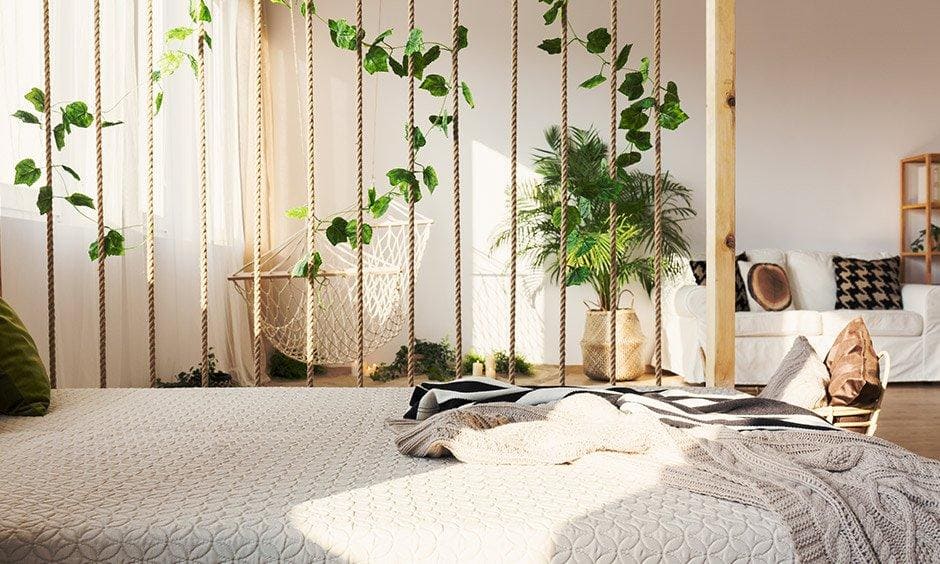

Open-plan homes can feel spacious and modern, but they are not always easy to organize. A single large room may need to function as a living room, home office, dining area, bedroom, or study zone—sometimes all in the same day. Building a permanent wall can solve the problem, but it also reduces flexibility and can be expensive.
That is where room dividers offer a practical middle ground.
A well-chosen divider can create privacy, define different activities, improve storage, and give an open room a more intentional layout without major construction. Depending on your needs, you can use a folding screen, curtain, open shelving, sliding panel, glass partition, or even plants to separate areas.
The key is choosing a divider based on what you actually want to achieve. A home office needs a different solution from a temporary guest sleeping area, while a small studio apartment may benefit from a divider that provides both privacy and storage.
This guide explains the main types of room dividers, where they work best, how to choose the right option, common mistakes to avoid, and practical ideas for making a divided room still feel bright and comfortable.
Why Use a Room Divider?
A room divider does more than simply split a room in half. It can help establish visual and functional boundaries while preserving much of the openness of the original space.
The biggest advantages include:
- Creating privacy
- Defining activity zones
- Improving room organization
- Adding storage
- Reducing visual clutter
- Creating a temporary bedroom or office
- Adding architectural interest
- Avoiding permanent construction
This makes room dividers particularly useful in apartments, studios, shared homes, rental properties, and open-plan houses.
A Divider Is Not Always About Privacy
One useful distinction is between visual separation and physical privacy.
An open bookshelf may clearly indicate that one side is a workspace and the other is a living area, but it will not block sound or completely hide the desk.
A curtain, solid folding screen, or opaque sliding panel provides greater visual privacy.
If your real problem is noise, however, neither option should be expected to perform like a properly constructed wall. Choosing the divider according to the problem you are trying to solve prevents disappointment.
Types of Room Dividers
There is no single best room divider. The right choice depends on the size of the room, how permanent you want the solution to be, how much light needs to pass through, and whether you need storage.
1. Folding Room Dividers
Folding screens are among the easiest room dividers to use.
They typically consist of several connected panels that can be opened, repositioned, or folded away.
Common materials include:
- Wood
- Rattan
- Bamboo
- Fabric
- MDF
- Metal frames
They work particularly well when you want flexibility.
For example, a folding screen can separate a home office during working hours and then be folded away in the evening.
Best for: renters, temporary separation, bedrooms, home offices, and flexible layouts.
Main limitation: lightweight folding screens usually provide visual privacy rather than significant sound reduction.
2. Sliding Room Dividers
Sliding panels offer a cleaner, more architectural appearance.
They are commonly mounted on ceiling or floor tracks and can be moved when you want to open or close a space.
Possible materials include:
- Wood
- Frosted glass
- Clear glass
- Acrylic
- Composite panels
- Metal-framed panels
Sliding dividers are especially useful when a room sometimes needs to function as one large space and sometimes as two separate areas.
Best for: living rooms, bedrooms, home offices, and larger open-plan spaces.
Main limitation: installation is more involved than simply placing a folding screen in the room.
3. Curtains as Room Dividers
Curtains are one of the most affordable and flexible ways to divide a room.
A ceiling-mounted track or tension system can allow fabric panels to move across an opening whenever privacy is needed.
Curtains can also soften a room because fabric introduces texture that hard architectural materials cannot.
They are particularly useful for:
- Studio apartments
- Temporary bedrooms
- Dressing areas
- Home offices
- Rental properties
Choose heavier, tightly woven curtains when privacy matters. Lightweight sheer curtains are better when you want visual definition while keeping the room bright.
4. Open Shelving Room Dividers
An open shelving unit can perform two jobs at once: dividing the room and providing storage.
This makes it particularly valuable in smaller homes where every piece of furniture needs to earn its space.
You can use shelving to display:
- Books
- Plants
- Artwork
- Storage baskets
- Decorative objects
The important advantage is that open shelving separates areas without completely blocking light.
Avoid Overloading the Shelves
One common mistake is filling every compartment.
A completely packed shelf can make both sides of the room feel cluttered.
Leave some openings so that light and sightlines can pass through.
5. Glass Room Dividers
Glass partitions provide separation while maintaining visual openness.
Clear glass allows maximum light transmission, while frosted or textured glass provides greater visual privacy.
Black-framed glass partitions can create an industrial or contemporary appearance, while frameless options tend to feel lighter and more minimal.
Glass is particularly useful when you want to separate:
- A home office from a living room
- A bedroom from a larger studio
- A dining area from a kitchen
- A workspace from a shared room
The main drawback is that glass partitions generally require more planning and installation than portable dividers.
6. Decorative Screens
Decorative screens are useful when the divider itself is intended to become part of the interior design.
Options range from carved wood and woven materials to patterned panels and contemporary geometric designs.
A decorative screen can become a focal point rather than something that visually disappears.
Choose one that complements the room’s existing materials rather than competing with them.
7. Plants as Natural Room Dividers
Large plants can create surprisingly effective visual boundaries.
Tall plants, groups of planters, or vertical plant stands can separate a seating area from a workspace without introducing a heavy visual barrier.
This approach works especially well in bright rooms.
However, plants are best viewed as visual zoning, not true privacy solutions. They will not provide the same separation as a solid panel or curtain.
How to Choose the Right Room Divider
Before buying a divider, identify the actual problem you are trying to solve.
If You Need Privacy
Consider:
- Curtains
- Solid folding screens
- Opaque panels
- Frosted glass
- Sliding doors
If You Need Storage
Consider:
- Open shelving
- Bookcases
- Storage cabinets
If You Need Flexibility
Consider:
- Folding screens
- Curtains
- Freestanding panels
If You Want to Preserve Natural Light
Consider:
- Glass
- Open shelving
- Slatted wood panels
- Plants
- Semi-transparent curtains
If You Want a Permanent Architectural Feel
Consider:
- Sliding partitions
- Framed glass
- Built-in shelving
- Slatted wall systems
Room Divider Ideas for Small Spaces
Small rooms require more careful planning because an oversized divider can make the space feel even smaller.
Use Vertical Space
A tall divider can create separation without taking up much floor area.
For example, a narrow shelving unit extending upward can define a bedroom zone while preserving usable floor space.
Choose Visually Light Materials
Open shelving, slatted wood, glass, and lightweight curtains can create boundaries without making the room feel enclosed.
Combine Separation With Storage
In a small apartment, a divider that also stores books, clothing, or household items is often more useful than a purely decorative screen.
This is one of the biggest advantages of multifunctional room dividers.
Room Dividers for Studio Apartments
Studio apartments are one of the strongest use cases for room dividers because one room may need to serve several functions.
A practical layout might include:
Sleeping zone → divider → living zone → dining/work zone
A curtain or sliding partition can separate the bed from the living area when privacy is needed while allowing the entire studio to feel open when the divider is pulled back.
For a more permanent appearance, a partial-height shelving unit or glass partition can create a bedroom boundary without making the apartment feel like a collection of tiny rooms.
Creating a Home Office With a Room Divider
Working from the same room where you relax can make it difficult to establish a clear boundary between work and personal time.
A room divider can create a visual signal that says, “This is the work zone.”
Useful choices include:
- Folding screens
- Curtains
- Open shelving
- Glass partitions
- Slatted panels
Position the divider so that the workspace receives adequate natural light without creating distracting glare on your screen.
A useful trick is to keep the desk visually simple. If the divider is already a strong design feature, the workspace does not need additional visual clutter.
Using Room Dividers in Bedrooms
In a large bedroom, a divider can create separate zones without building another wall.
Possible uses include:
- Sleeping and dressing areas
- Bed and workspace
- Vanity and sleeping area
- Changing area
- Reading corner
A slatted wood divider can provide a sense of separation while maintaining airflow and light.
Curtains work particularly well when you want the option to completely open the space again.
Room Dividers for Living Rooms
Living rooms often contain several competing functions.
You may have:
- Television viewing
- Conversation
- Reading
- Working
- Dining
Instead of arranging furniture randomly throughout the room, use a divider to establish a clear relationship between these areas.
For example, an open bookcase can sit behind a sofa, creating a subtle boundary between the living area and a workspace.
The divider does not necessarily need to reach from floor to ceiling. Sometimes a waist-height or half-height element provides enough visual definition.
Room Dividers for Bedrooms and Guest Spaces
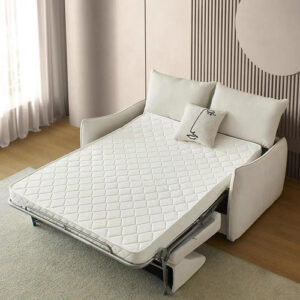
If you occasionally host guests, a divider can create a temporary sleeping area.
A practical setup might combine:
- A folding screen
- Curtain panels
- A sofa bed
- Portable lighting
- Small storage furniture
This approach is especially useful when a dedicated guest bedroom is not available.
However, make sure the temporary sleeping area still has adequate ventilation, access, lighting, and a comfortable route to the rest of the home.
Room Divider Materials: Which Is Best?
| Material | Best For | Main Advantage | Consideration |
|---|---|---|---|
| Wood | Warm interiors | Durable and decorative | Can feel visually heavy |
| Glass | Modern spaces | Preserves light | Requires careful installation |
| Fabric | Flexible layouts | Affordable and soft | Limited sound control |
| Metal | Contemporary interiors | Strong and durable | Can feel industrial |
| Rattan/Bamboo | Natural interiors | Lightweight appearance | May offer limited privacy |
| Acrylic | Modern small spaces | Light and versatile | Can scratch |
| Shelving | Small homes | Adds storage | Can create clutter |
There is no universally superior material. The best option depends on the function of the room.
How to Make a Room Divider Look Intentional
A divider can look like an afterthought if it does not relate to the rest of the room.
To make it feel integrated:
- Repeat a material already present in the room.
- Match or complement the existing color palette.
- Align the divider with furniture rather than placing it randomly.
- Avoid blocking important windows unnecessarily.
- Keep circulation paths clear.
- Consider the view from both sides of the divider.
A good divider should look intentional from every angle.
Common Room Divider Mistakes
Making the Divider Too Large
A divider that is too wide or solid can make an open room feel cramped.
Blocking Natural Light
Before installing a solid partition, consider where daylight enters the room.
Ignoring Traffic Flow
People should not have to squeeze around furniture or walk awkwardly through the divided zones.
Expecting Soundproofing
Most decorative room dividers reduce visual distractions rather than sound.
If acoustic privacy is the priority, you need materials and construction specifically designed for sound control.
Forgetting About Stability
Tall freestanding dividers need to be stable, especially in homes with children or pets. Heavy units should be installed or secured according to the manufacturer’s instructions.
Are Room Dividers Better Than Permanent Walls?
It depends on the purpose.
Room Dividers Are Better When:
- You want flexibility
- You rent your home
- The layout changes frequently
- You want to preserve openness
- You need a relatively simple installation
Permanent Walls Are Better When:
- You require full privacy
- Sound separation is important
- You need a permanent bedroom
- Building regulations require a proper enclosure
- You want a long-term structural solution
Room dividers are not a replacement for every wall. Their strength is flexibility.
Three Practical Insights People Often Miss
The best divider may not divide the entire room
A partial divider can be enough to establish a psychological and visual boundary. This often preserves more light and makes a room feel larger.
Furniture placement can matter more than the divider itself
A beautifully designed screen will not fix a poorly planned layout. Establish the circulation and functional zones first, then choose the divider.
Think about both sides
A divider separates two spaces, so both sides should work visually and practically. A bookshelf that looks attractive from the living room may be inconvenient if the other side becomes difficult to access.
FAQ
What is the best room divider for a small room?
Open shelving, curtains, slatted panels, and glass partitions are often effective in small rooms because they create separation without making the space feel completely closed. A shelving divider is particularly useful when storage is also needed. The best choice depends on whether privacy, flexibility, light, or storage is your main priority.
What can I use instead of a wall to divide a room?
You can use folding screens, curtains, bookshelves, sliding panels, glass partitions, plants, or decorative screens. These options allow you to create separate zones without necessarily making a permanent structural change. Choose based on the level of privacy and permanence you need.
Do room dividers make a room look smaller?
A solid, oversized divider can make a room feel smaller, especially when it blocks natural light. Open shelving, glass, slatted panels, and lightweight curtains usually preserve a greater sense of space. Choosing the correct scale is just as important as choosing the material.
Can a room divider create a bedroom?
Yes. A divider can visually separate a sleeping area from the rest of a studio or open-plan room. Curtains, sliding panels, shelving, and opaque screens can provide varying levels of privacy, but they may not provide the same acoustic, fire-safety, or structural characteristics as a permanent bedroom wall.
Are room dividers good for home offices?
Yes. A room divider can create a clear visual boundary around a workspace and reduce distractions. Folding screens, curtains, shelving, and glass partitions are all useful options depending on the amount of privacy and natural light required.
Conclusion
Room dividers offer a practical way to organize modern homes without automatically committing to permanent construction.
The right divider can create a home office, define a dining area, separate a bedroom, add storage, provide visual privacy, or simply make a large room feel more organized. Folding screens and curtains are ideal for flexibility, shelving works well when storage matters, while glass and sliding partitions offer a more permanent architectural appearance.
The most important step is to start with the problem rather than the product. Decide whether you need privacy, storage, visual separation, flexibility, or better zoning. Then choose a divider that solves that specific problem without sacrificing light, circulation, or the feeling of space.
A successful room divider should do more than split a room—it should make the entire layout work better.